
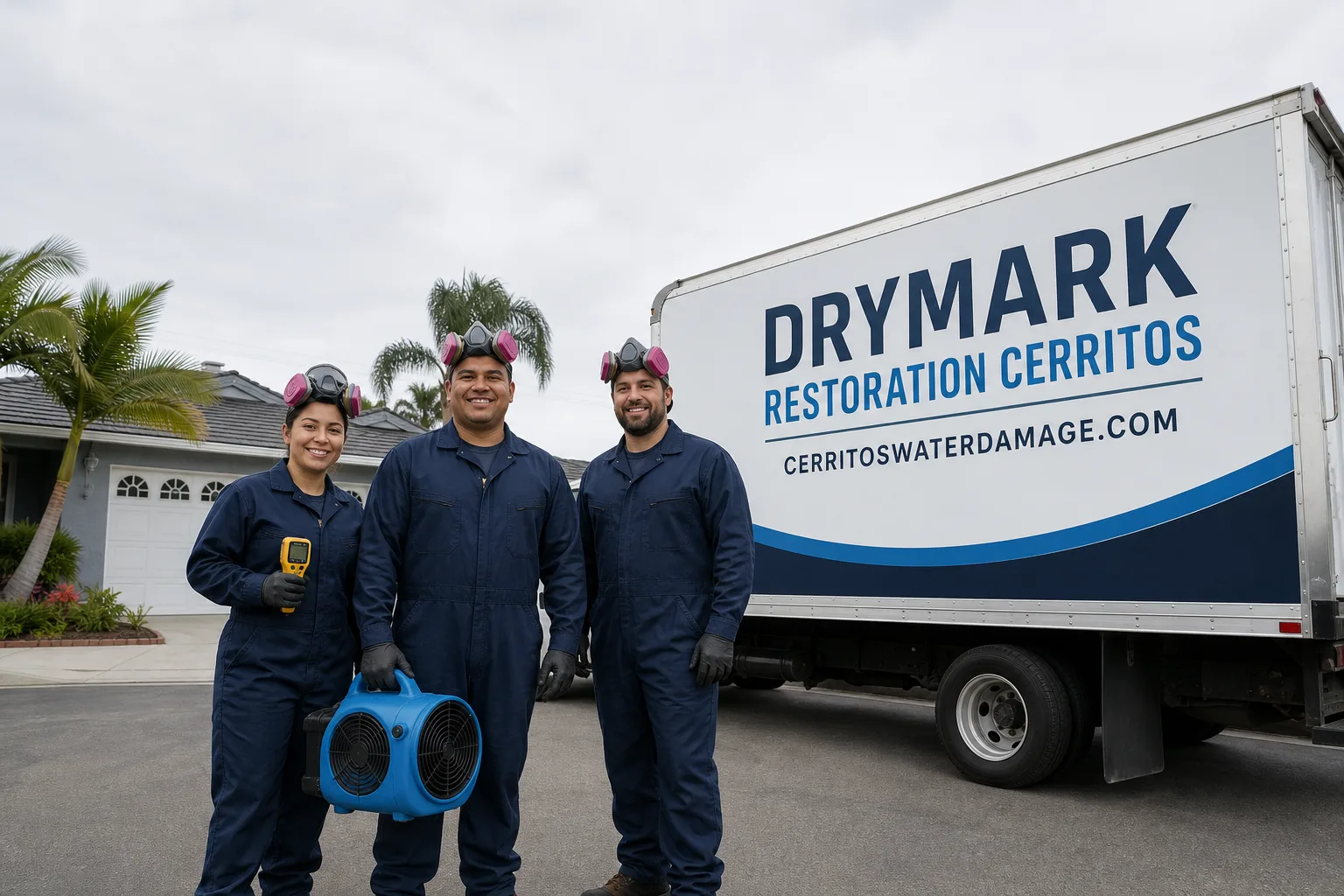
Free visual inspection and a written scope of work before any mitigation begins - photos, moisture readings, and drying logs go in your claim file
The scope we write is the scope we bill. Anything new gets shown to you, in writing, before we touch it.
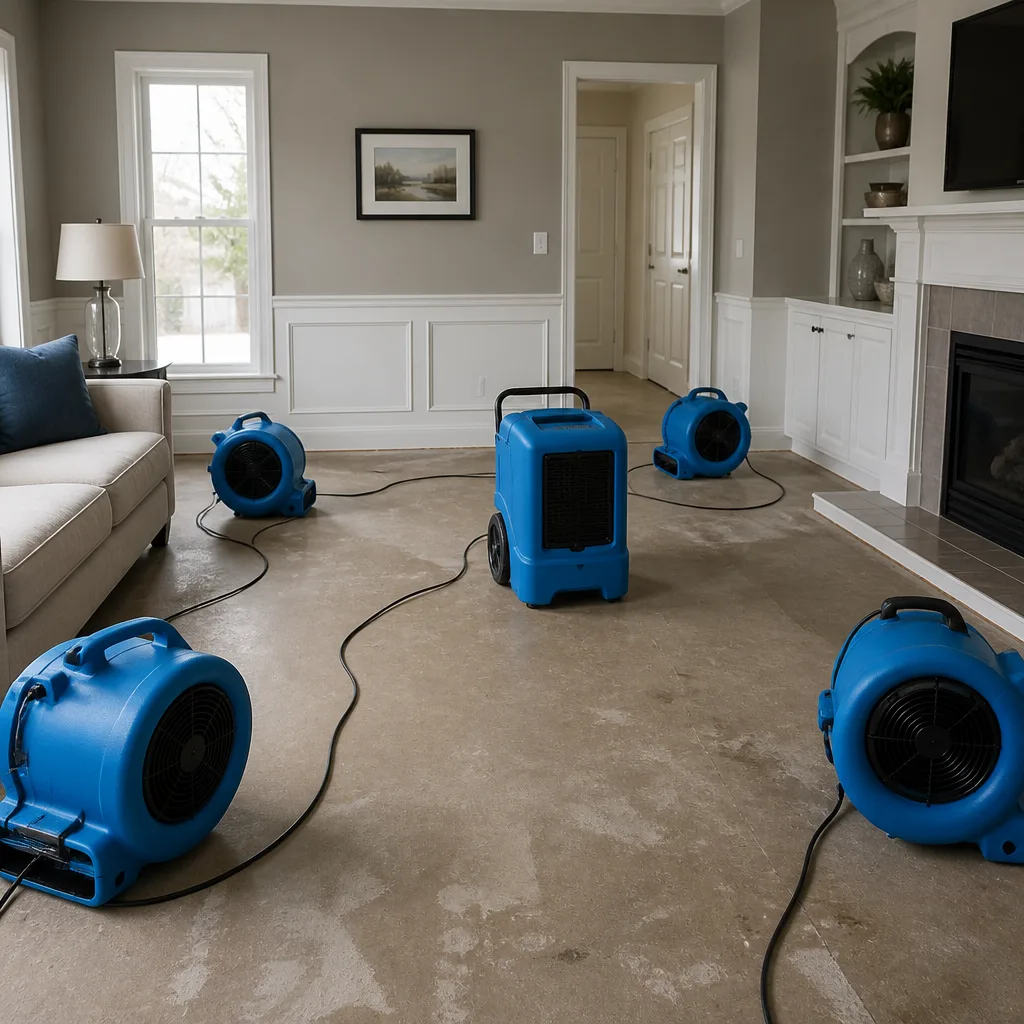
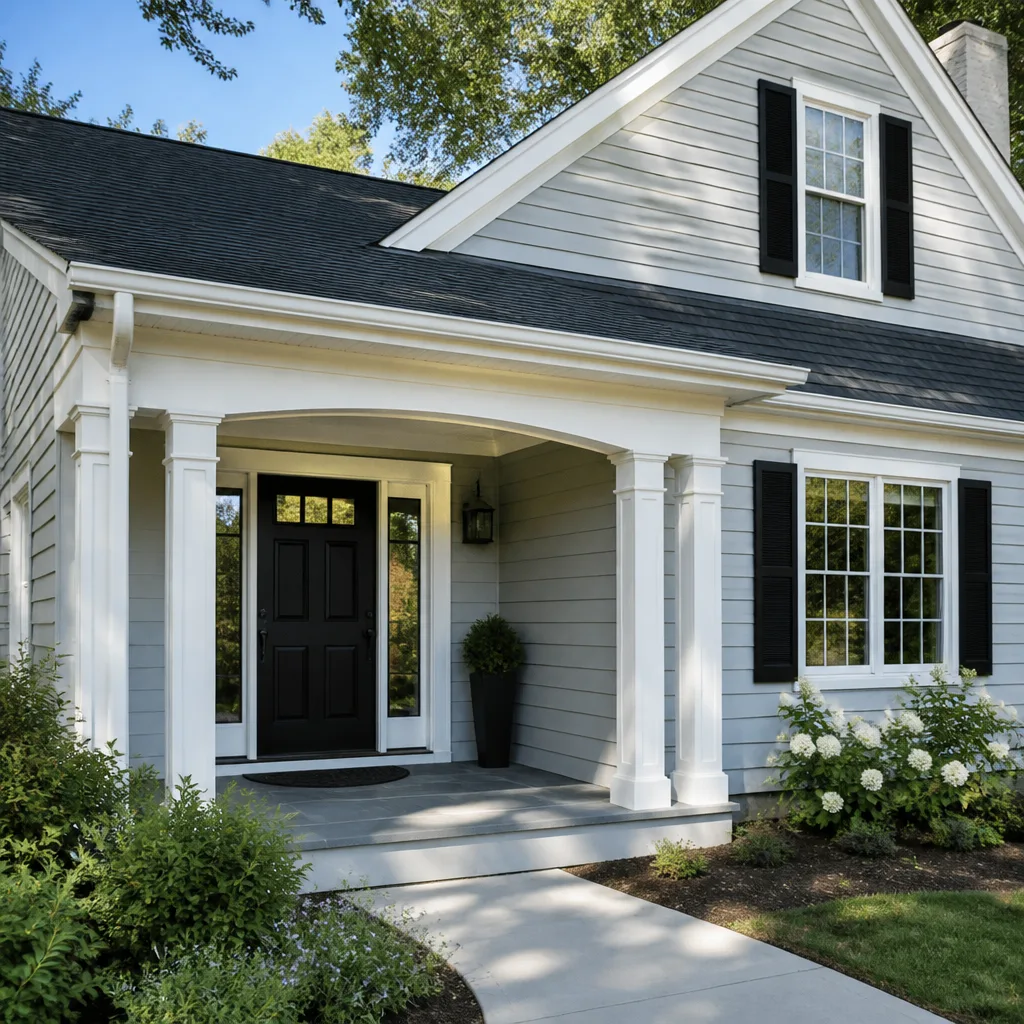
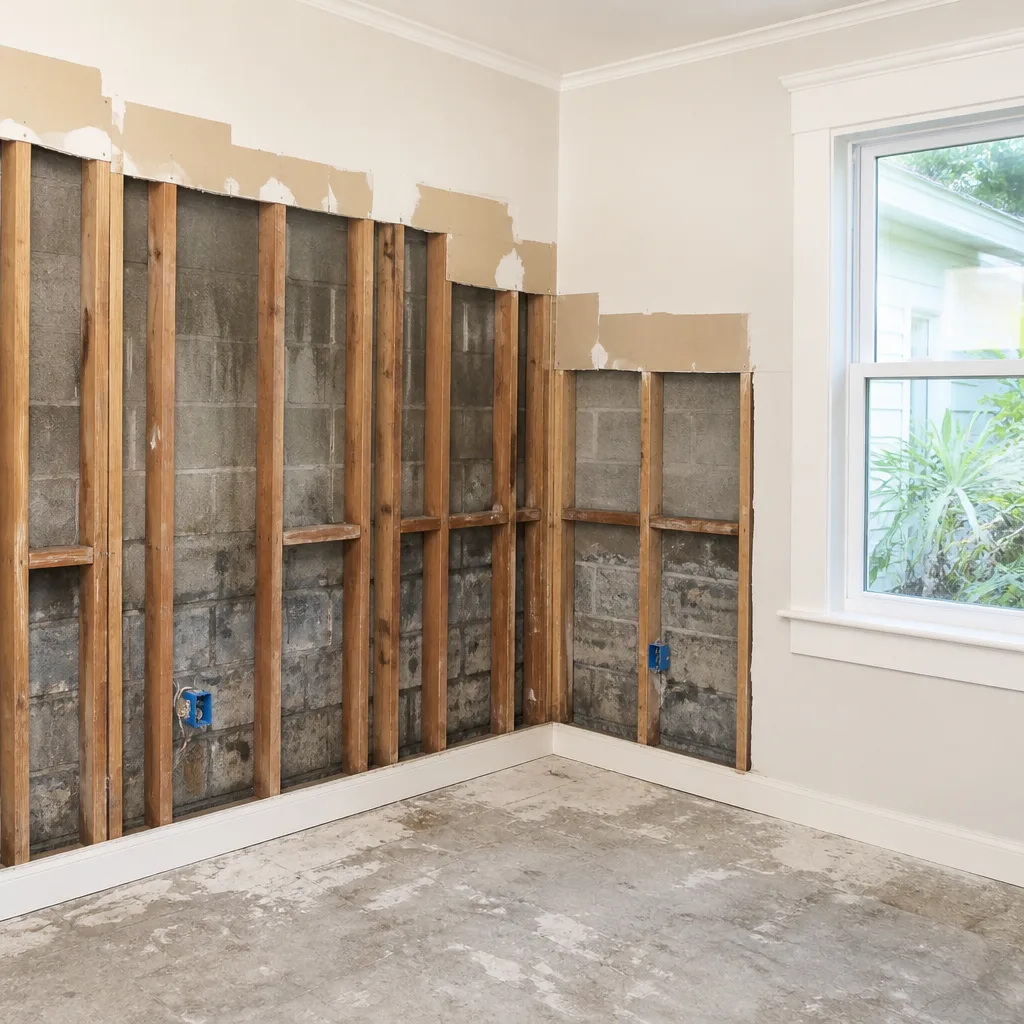
 Before
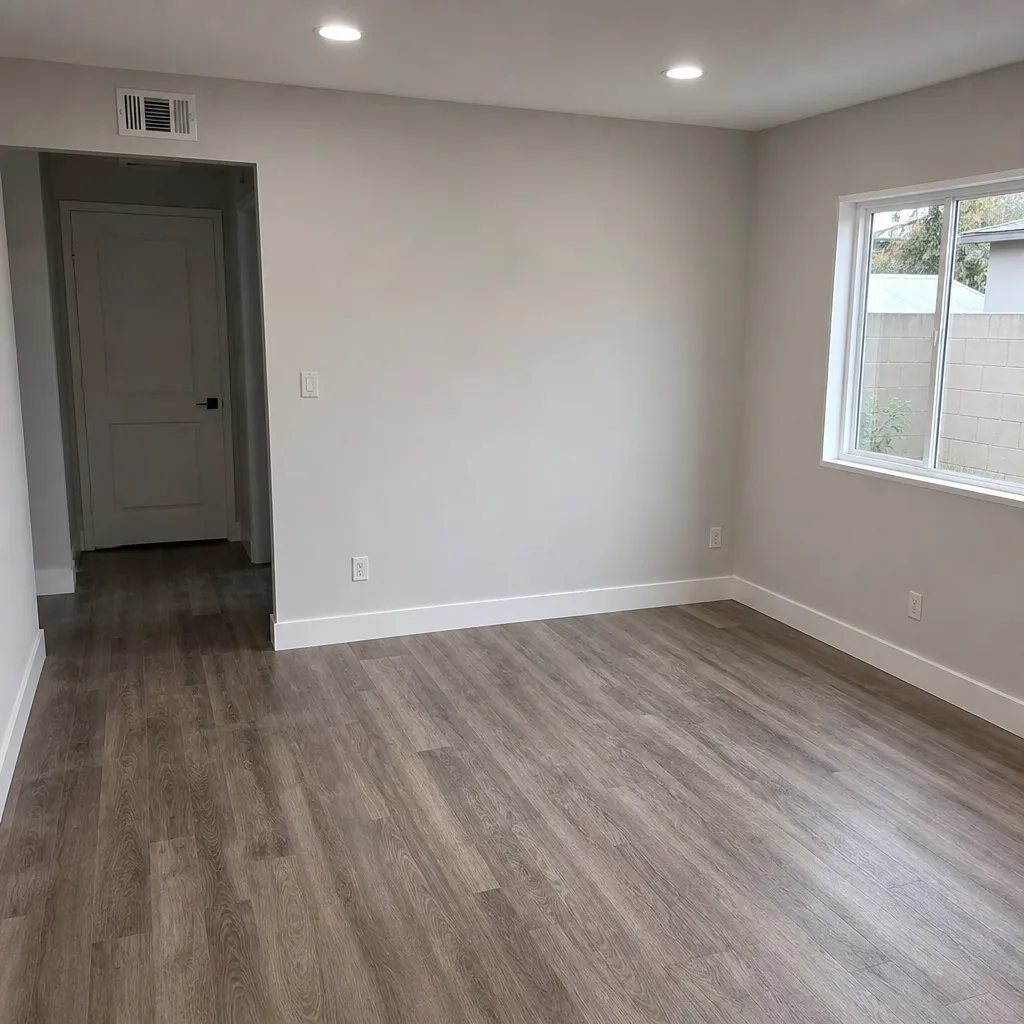 After
After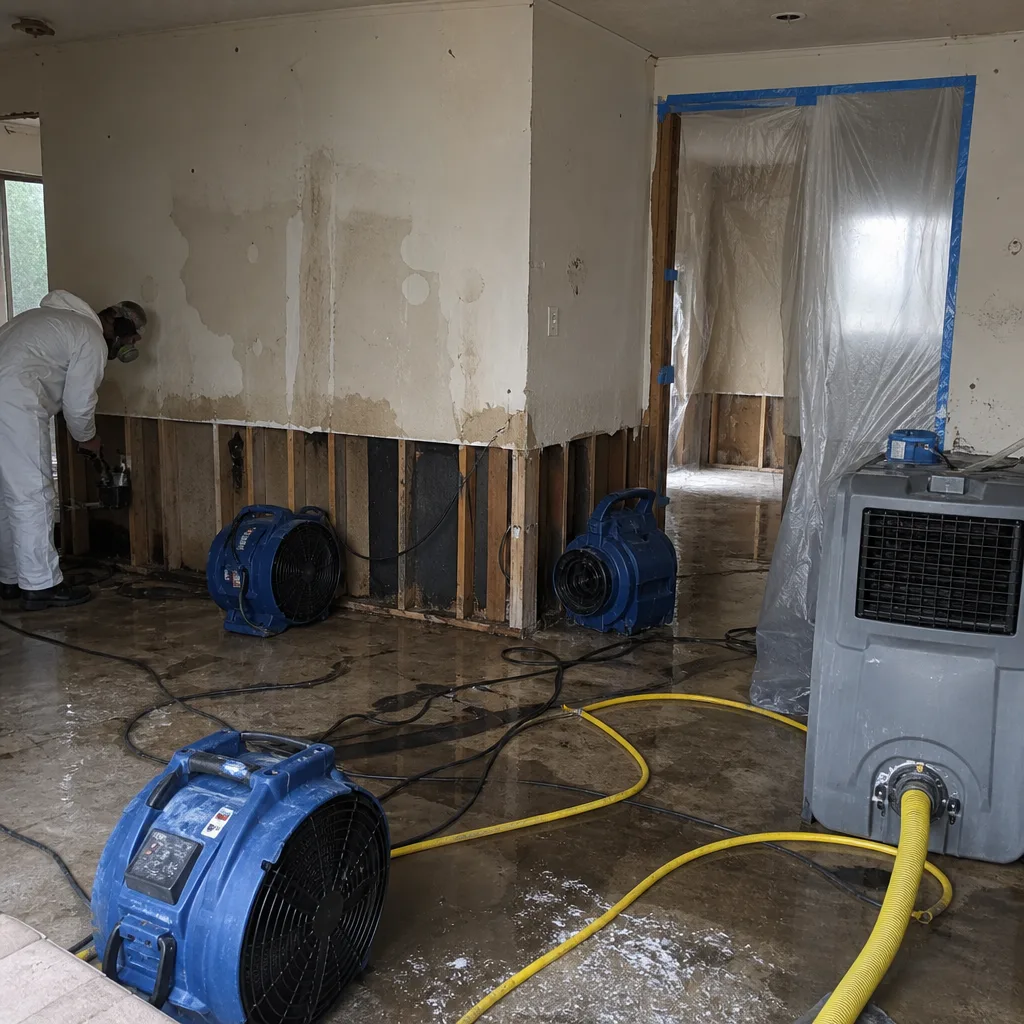 Before
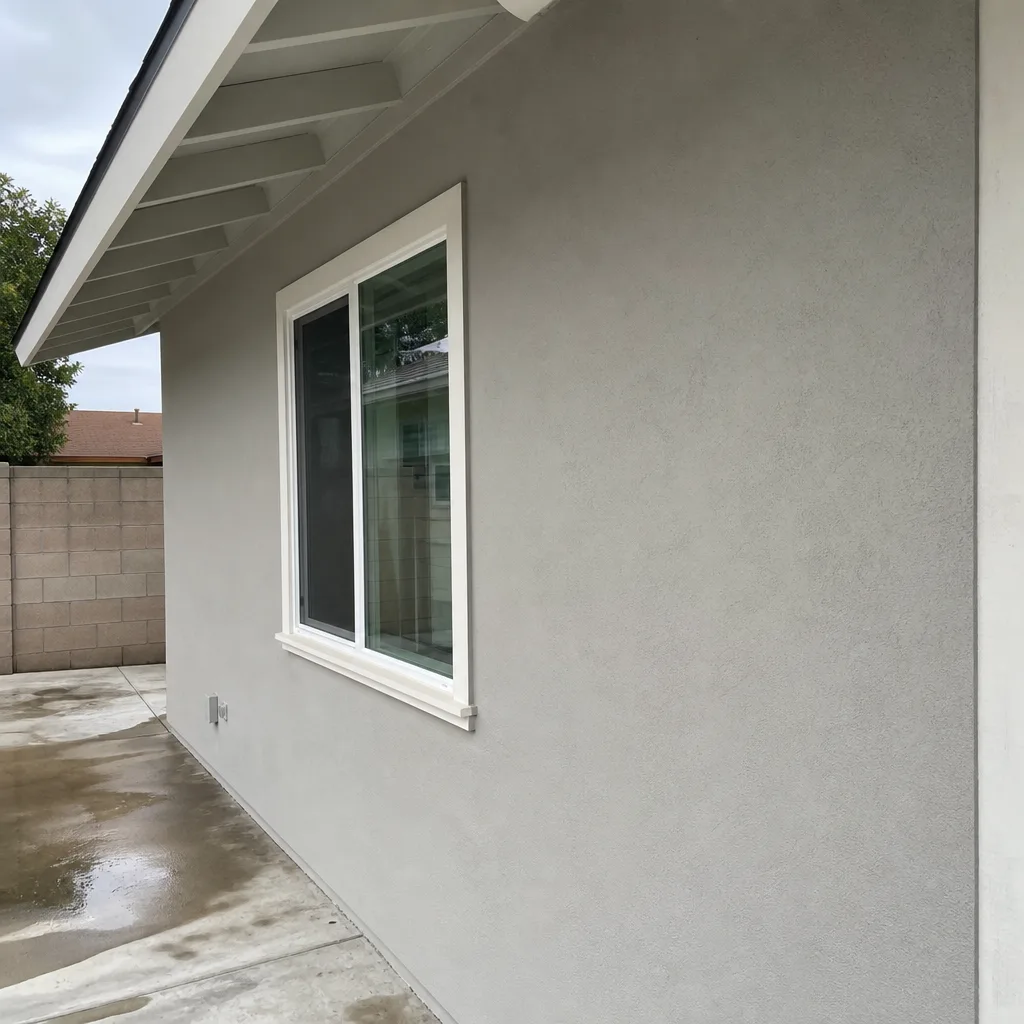 After
After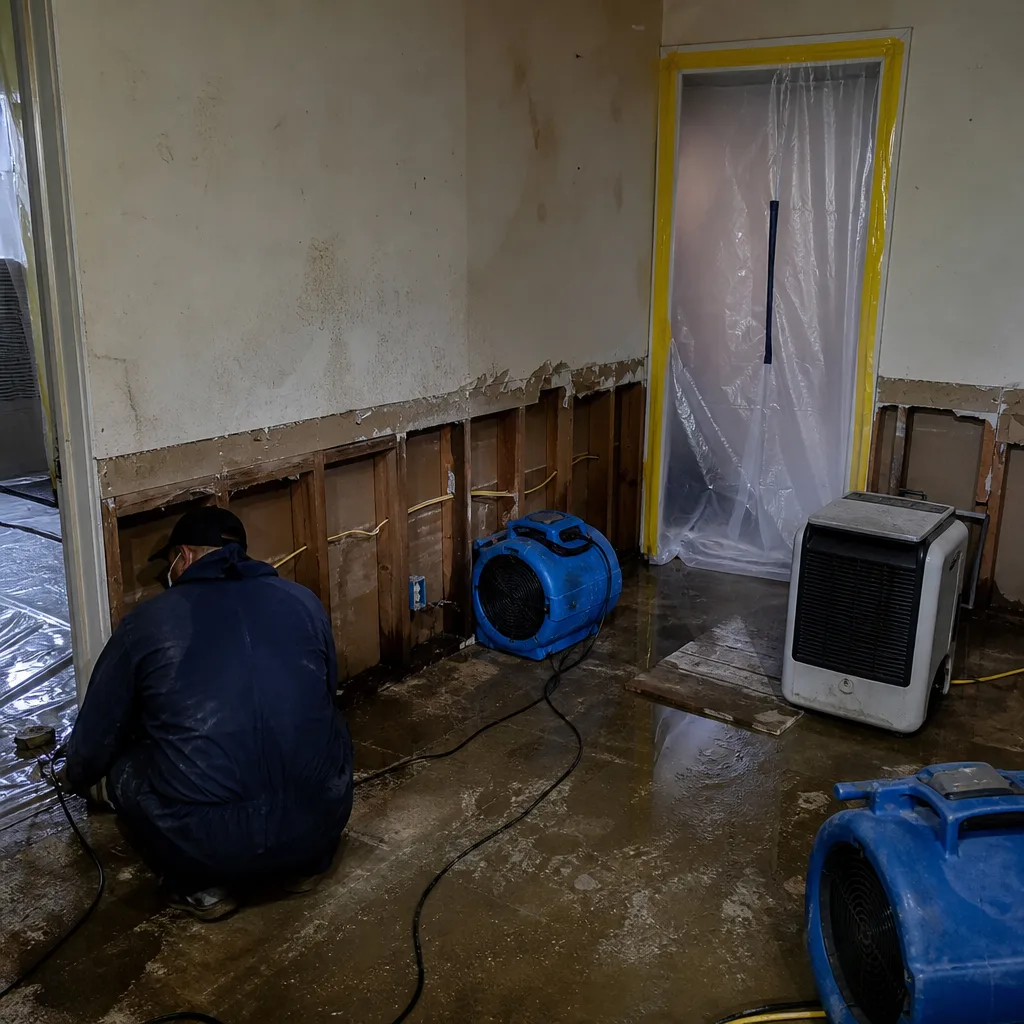 Before
 After
AfterFast, Reliable Mold Remediation Across Lakewood
Mold remediation in Lakewood typically costs between $1,200 and $4,800 depending on the scope, with most slab-leak-related jobs falling in the $2,400-$3,600 range after water damage has already migrated unseen. We’re available by live phone 24 hours a day, 7 days a week at (562) 600-5083, and our crews dispatch to Lakewood from our Los Angeles office with equipment staged for the specific challenges these homes present.
We know Lakewood’s streets because we’ve dried them. The 1950s tract houses on Lakewood Boulevard, the post-war slabs near Mayfair Park, the original Eichler-adjacent blocks off Del Amo - our techs carry the floor-plan familiarity that speeds containment and reduces unnecessary demolition. When you’ve seen the same slab-embedded copper failure pattern on Clarkdale Avenue, you don’t waste time guessing where the water went.
Why DryMark Restoration Cerritos Is Lakewood’s Preferred Mold Remediation Company
Our reputation in Lakewood was built on documentation, not slogans. Homeowners here research before they call, and they find our three-star reviews mentioning the same thing: we show the moisture readings, we deliver the written price before anyone starts work, and we leave a photo record that their adjuster can follow without a fight. Haven Standard, Clause 1 - written price before work begins - applies to every Lakewood job, no exceptions.
Response time to Lakewood averages 60-90 minutes during business hours and under 2 hours for after-hours emergency calls, because our crews know the local grid: Carson Street to the south, Del Amo Boulevard cutting east-west, the 605 corridor feeding directly in. We don’t navigate Lakewood; we operate here.
What separates us is pattern recognition born from repetition. In cities with mixed housing stock, mold calls arrive randomly. In Lakewood, they cluster. A slab leak on one block of 1952-built homes predicts the same failure on the next block, because the same copper lines were embedded in the same concrete pours, pressurized for the same 70 years. We use that predictability to move faster and scope more accurately than crews treating every call as a unique mystery.
Our Mold Remediation Services in Lakewood
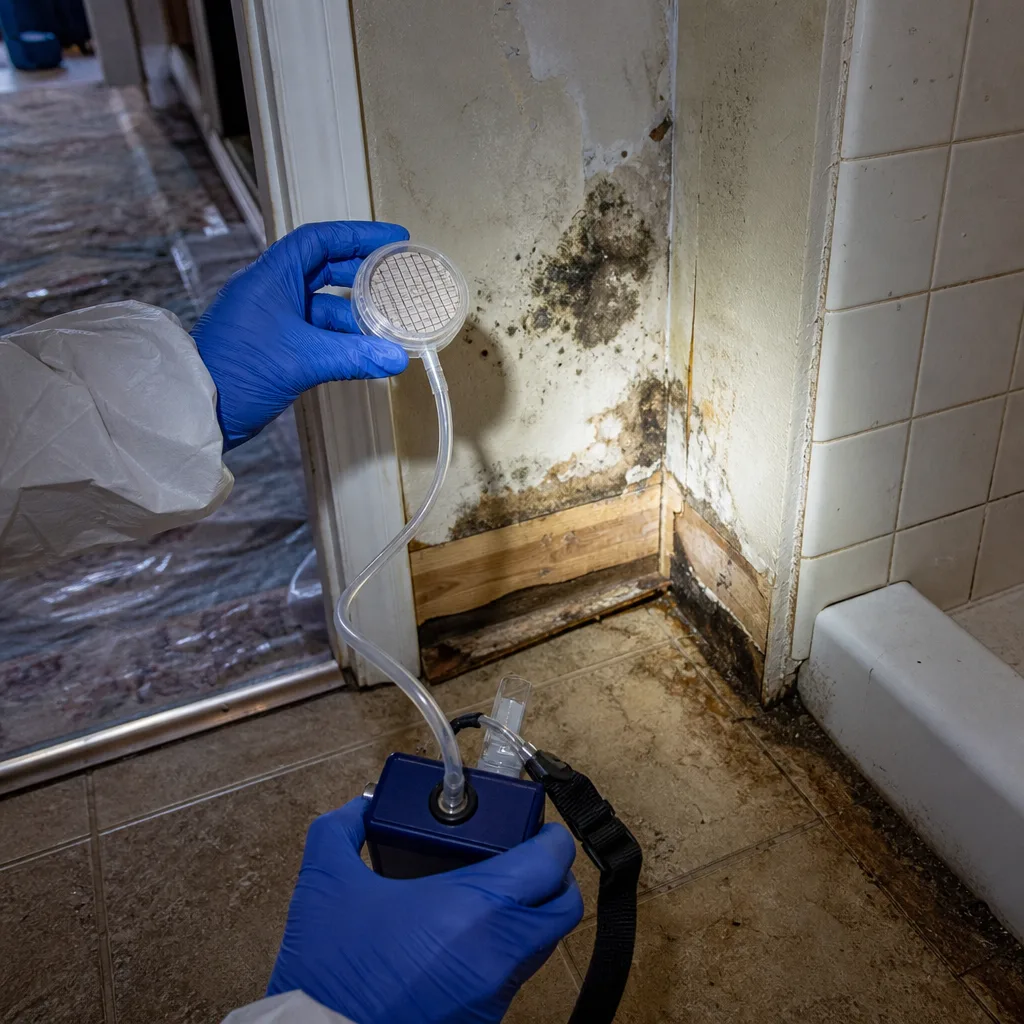
Mold Inspection & Testing
Every Lakewood inspection starts with a moisture map, not a visual scan. On slab-on-grade construction, we use thermal imaging to identify temperature differentials across the slab that indicate subsurface water migration - the pattern we found on Clarkdale Avenue, where a warm hall carpet masked 15 feet of lateral spread under laminate. We collect air and surface samples for third-party lab analysis, document chain of custody, and deliver results with a written scope and price before any containment goes up. Our Mold Remediation protocols follow IICRC S520 standards, and every reading is logged for your adjuster.
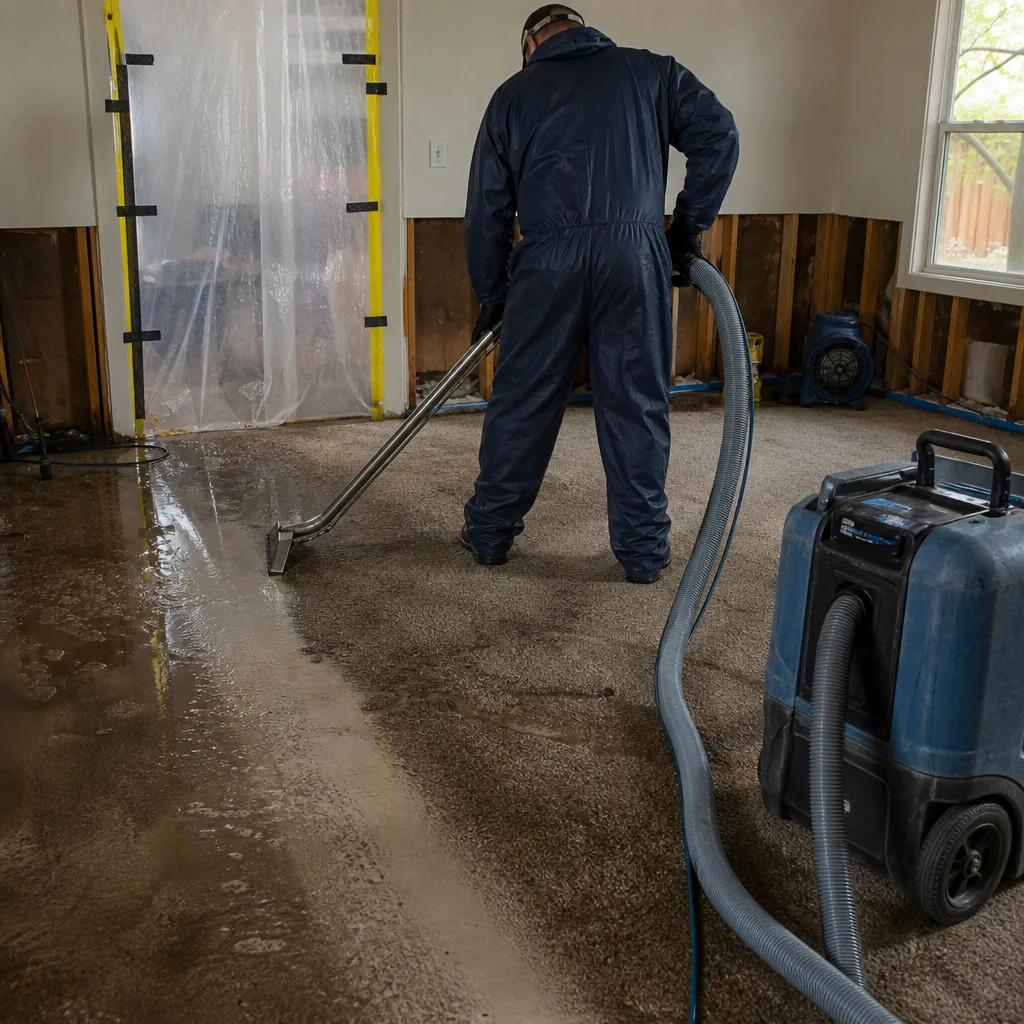
Mold Removal
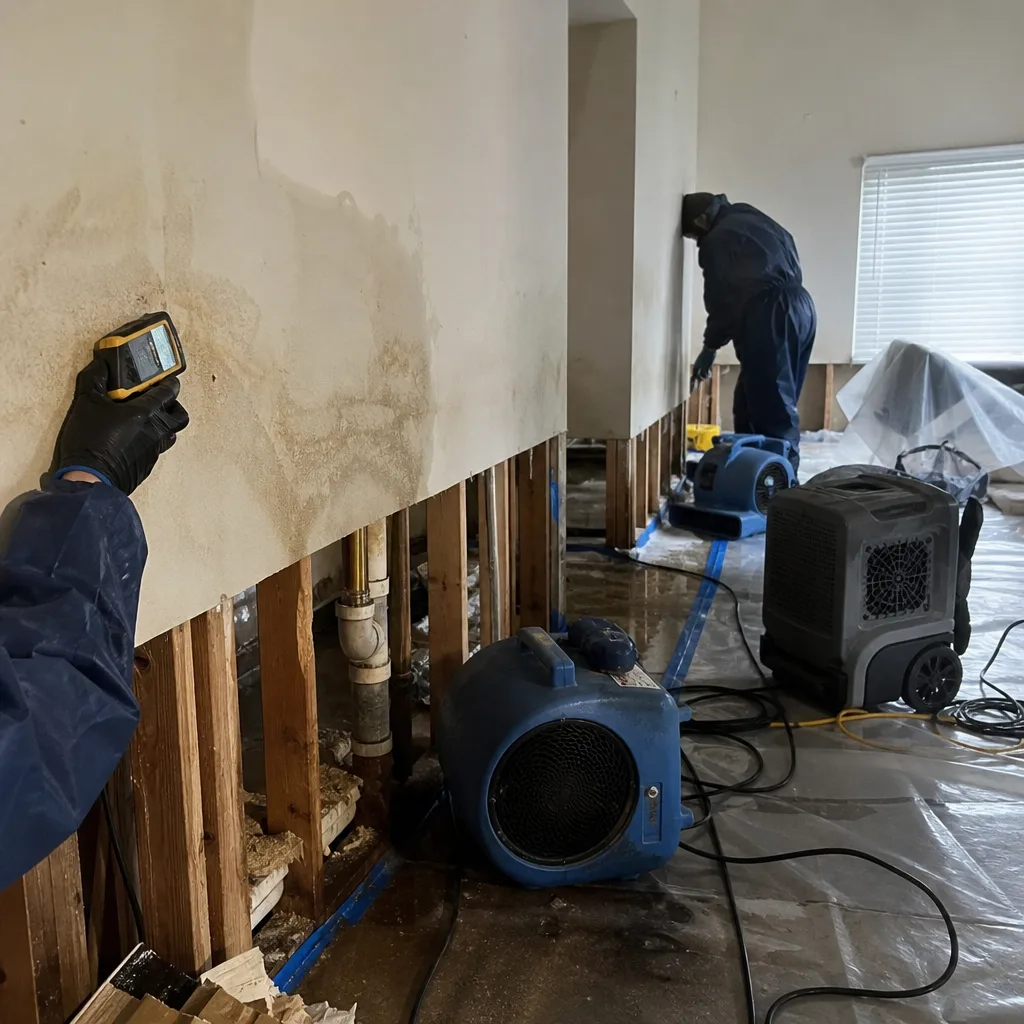
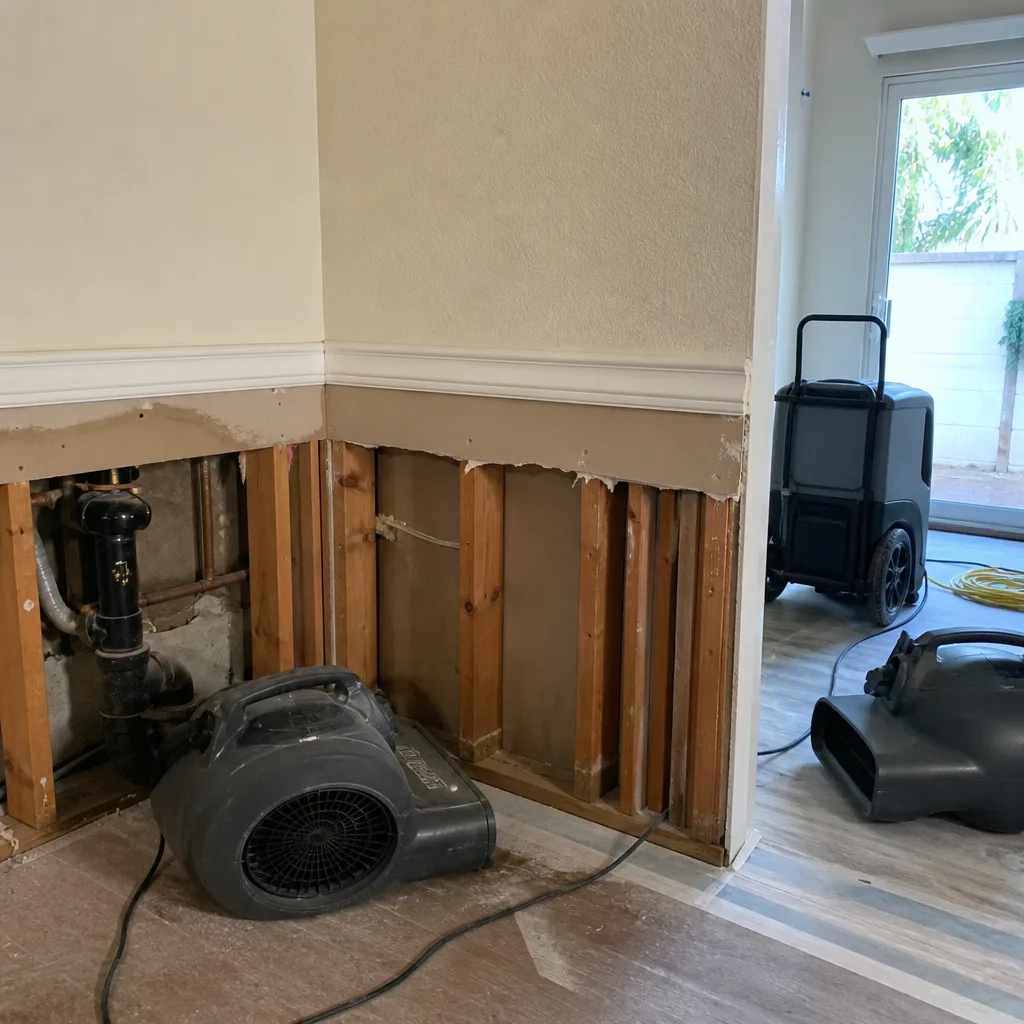
Removal in Lakewood tract houses requires understanding what the 1950s builders didn’t anticipate: no vapor barrier between slab and flooring, minimal wall cavity ventilation, and drywall that wicks moisture horizontally once the base is compromised. We establish containment with negative air pressure, remove compromised materials by the square foot (documented with pre- and post-removal photos), and treat remaining framing with antimicrobial application. The work stops when moisture readings confirm the substrate is below 16% MC, not when it looks dry.
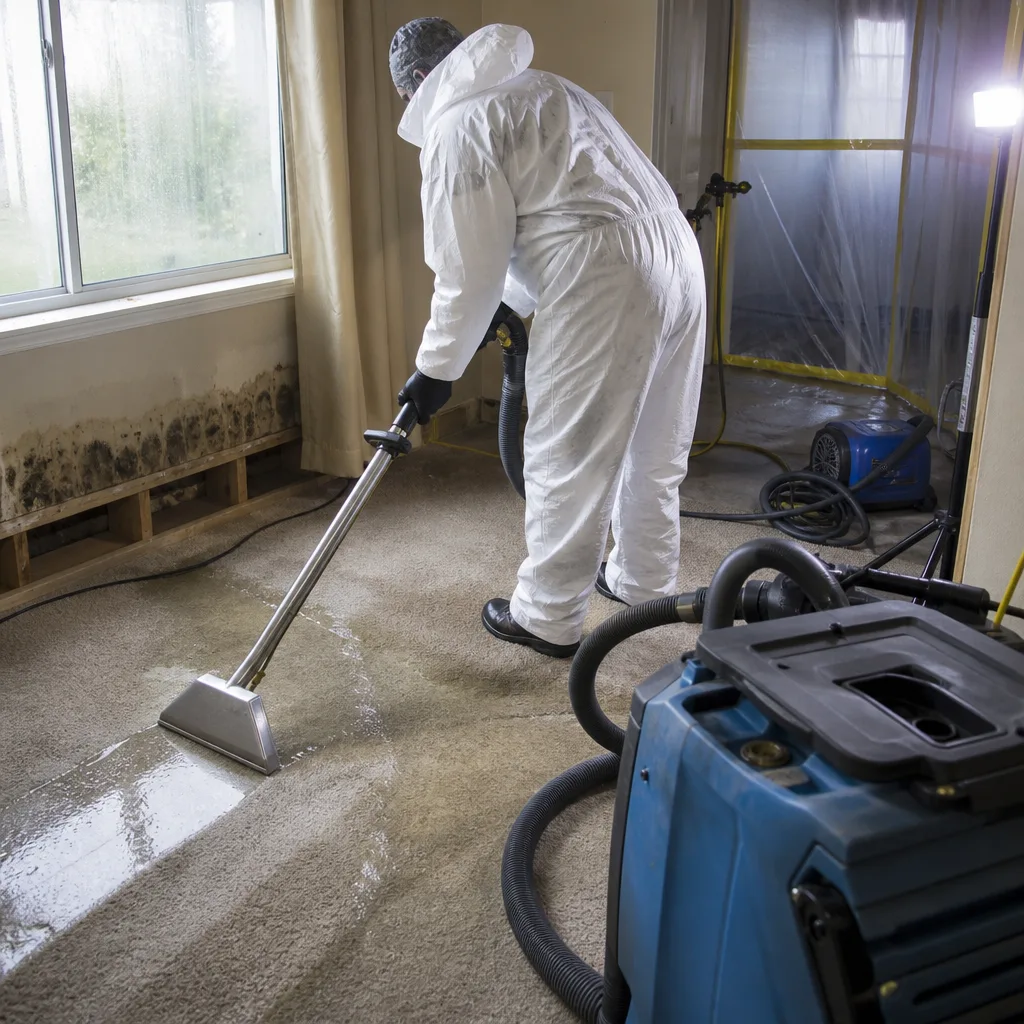
Black Mold Remediation
Stachybotrys growth in Lakewood homes follows a specific sequence: slab leak, delayed detection due to lateral migration, then sustained humidity from the coastal marine layer that keeps wall cavities above the 70% relative humidity threshold mold needs. We treat black mold with the same containment rigor as any toxigenic species - HEPA filtration, sealed egress, disposable PPE - but we also address the humidity driver. Without that second step, the colony returns.
Air Quality Restoration
Post-remediation air quality in Lakewood requires more than a single clearance sample. The marine-layer humidity that blankets this coastal basin means indoor RH rebounds quickly if the HVAC system isn’t balanced to compensate. We run multiple air samples across affected and adjacent rooms, compare spore counts to outdoor baseline, and document particulate levels with calibrated particle counters. Our report includes humidity control recommendations specific to Lakewood’s climate, not generic advice that ignores the Pacific influence.
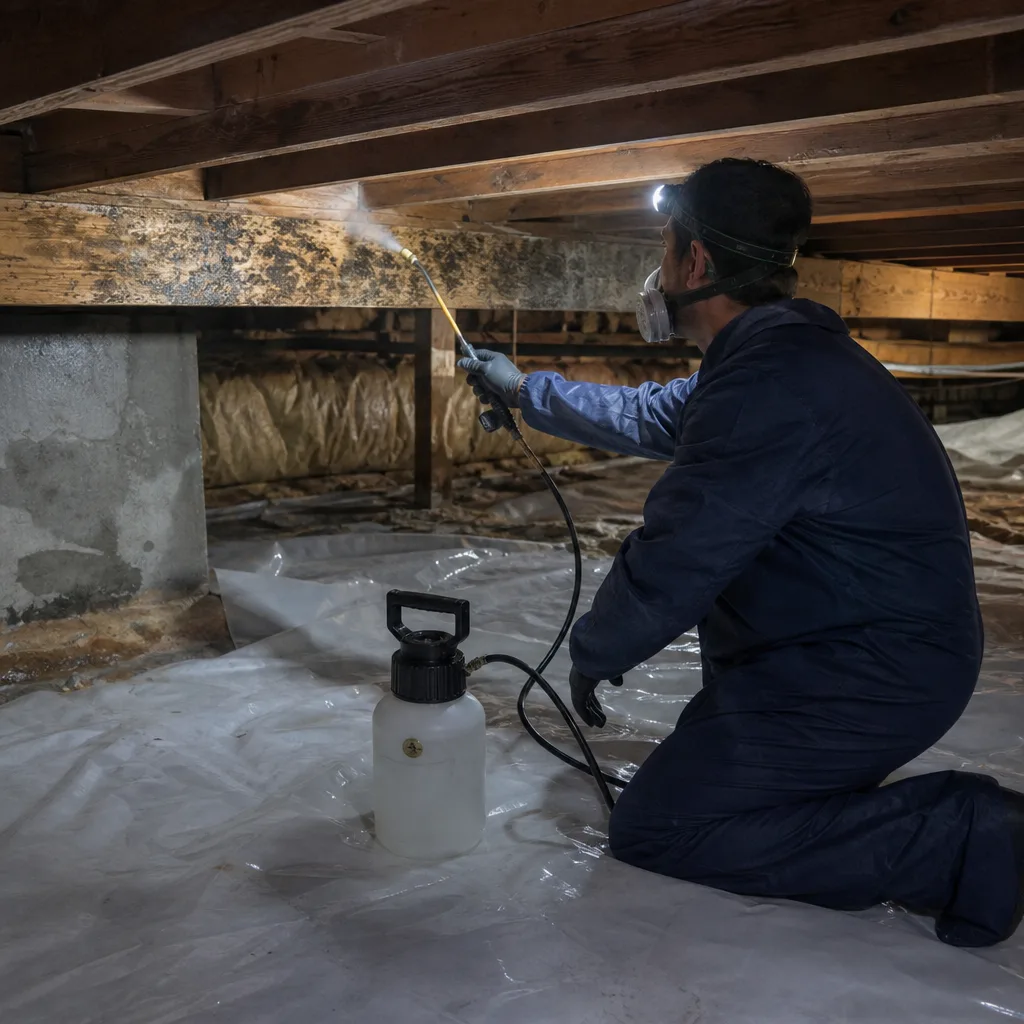
Moisture & Humidity Control
This is where most Lakewood jobs fail if handled by inland crews. Baseline humidity here runs higher than Cerritos or Bellflower because of the persistent marine layer that rolls in from Long Beach. A drying protocol that works 10 miles inland leaves Lakewood wall cavities still wet. We adjust our psychrometric targets accordingly - higher dehumidification capacity, longer drying windows, and daily moisture logs that track vapor pressure differential until the numbers confirm equilibrium, not just surface dryness. Equipment from Dri-Eaz and Phoenix runs around the clock, with readings uploaded to your file every 24 hours.
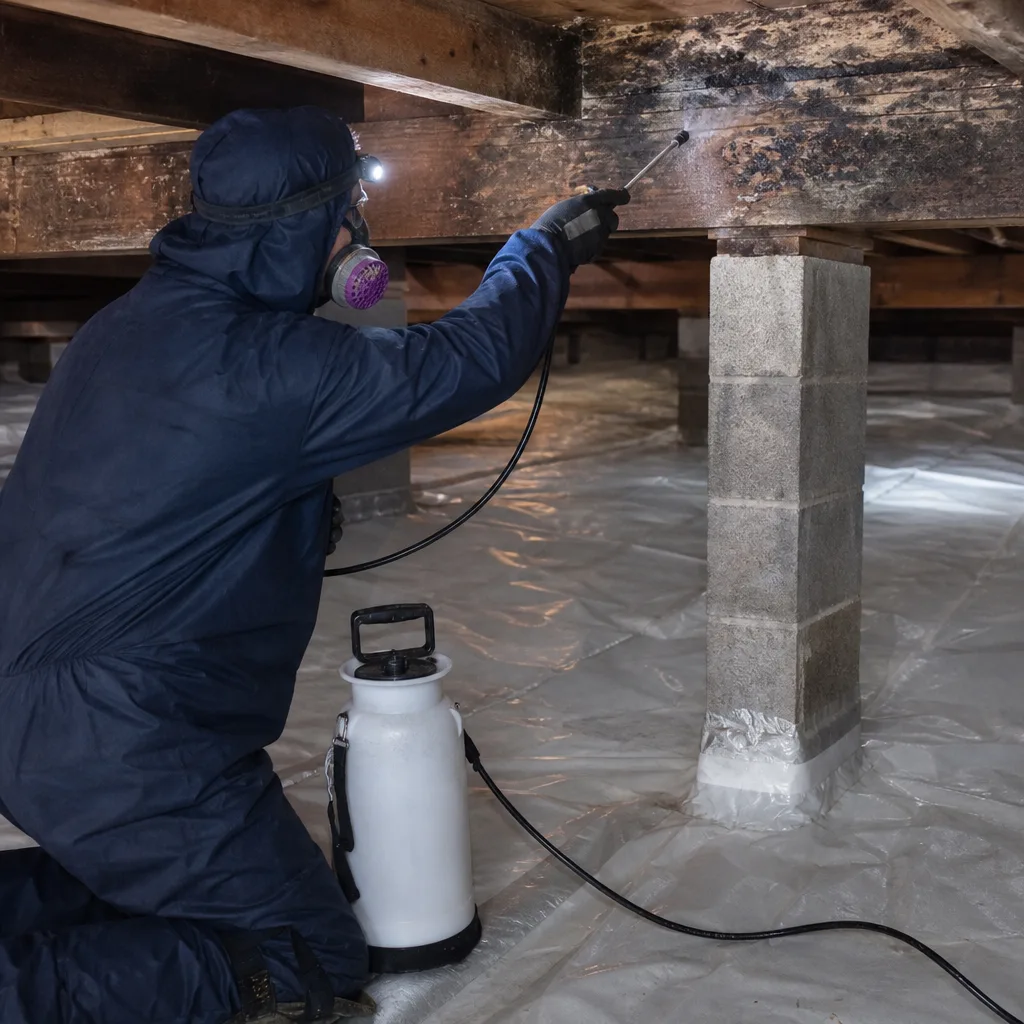
Crawl Space Treatment
True crawl spaces are rare in Lakewood’s slab-dominated housing stock, but minimal raised foundations do exist near the San Gabriel River channel. Where we encounter them, we apply the same documentation standard: vapor barrier assessment, ventilation calculation, and moisture source elimination before any treatment begins. The written scope specifies square footage, material specifications, and the photo record schedule.
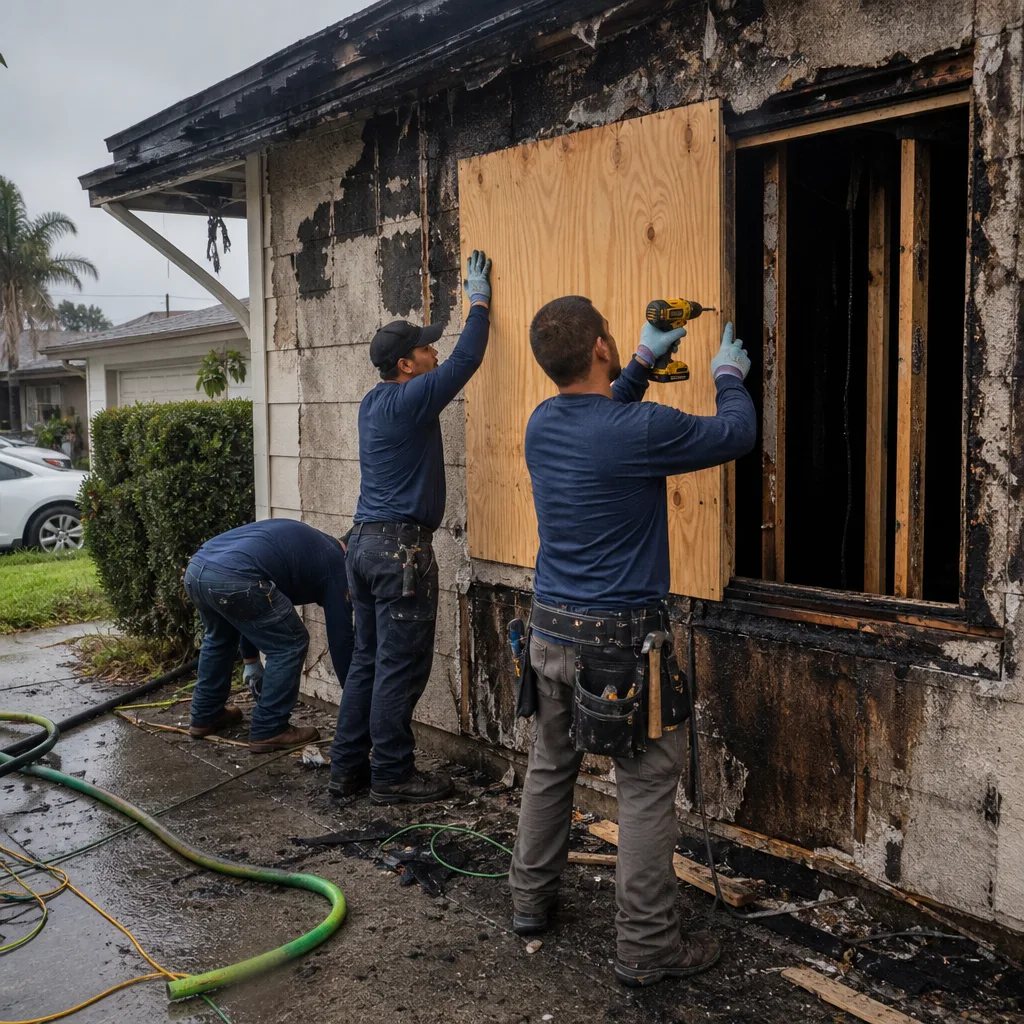
What happens when you call
- 1
A real person answersNo phone trees - you reach a local pro.
- 2
You get an upfront price rangeHonest numbers before anyone is dispatched.
- 3
A background-checked tech heads outLicensed & insured, dispatched right away.
- 4
You approve before work beginsNothing starts until you say go.
BeforeAfterTrusted Equipment & Standards We Deploy in Lakewood
Our Lakewood crews carry professional-grade drying systems from Dri-Eaz, Phoenix, and XPOWER - equipment selected for the high-capacity dehumidification that coastal humidity demands. We stock antimicrobial formulations rated for the specific mold species common to water-damaged 1950s construction, and our technicians arrive with the moisture meters, thermal cameras, and air sampling pumps needed to document the full extent of migration before a single piece of drywall comes down. Every machine hour, every reading, every photo is logged to IICRC, RIA, and IFA standards. That documentation turns restoration invoices into claims insurers pay without dispute.
Common Mold Remediation Problems We See in Lakewood Homes
- Partial drying after slab leaks. Water migrates laterally across Lakewood’s slab-on-grade construction, flooding subflooring in adjacent rooms before it ever surfaces. Crews who only dry the visible wet area leave hidden reservoirs that feed mold colonies days later. We map the full migration path first.
- Ignoring marine-layer baseline humidity. Lakewood’s persistent coastal damp air means wet materials dry slower here than inland. A standard drying window that works in Cerritos can leave wall cavities above 16% MC. We extend timelines and increase dehumidification capacity accordingly.
- Skipping the plumbing diagnosis. If the failed embedded copper or galvanized line isn’t located and repaired before drying begins, moisture reintroduces and mold restarts within 24-48 hours. We coordinate licensed plumbing repair into every slab-leak remediation scope.
- Atmospheric river yard flooding backing into slabs. Lakewood’s aging 1950s storm drainage can be overwhelmed by intense Pacific storms, sending water through garage slabs and perimeter foundations. We treat these as full-perimeter events, not isolated puddles.
Pricing for Mold Remediation in Lakewood, CA
| Service | Typical Range in Lakewood |
|---|---|
| Mold inspection & testing (air + surface samples) | $350 - $650 |
| Contained mold removal, small area (under 10 sq ft) | $1,200 - $1,800 |
| Moderate remediation with drywall removal (1-2 rooms) | $2,400 - $3,600 |
| Extensive slab-leak remediation with drying | $3,800 - $6,200 |
| Post-remediation air quality restoration & clearance | $450 - $850 |
| Moisture & humidity control system installation | $1,800 - $4,200 |
What moves a Lakewood job to the higher end: slab leak with lateral migration across multiple rooms, Category 2 or 3 water requiring antimicrobial treatment, asbestos-containing materials in pre-1978 construction requiring abatement coordination, and jobs where previous partial drying has allowed mold to establish in wall cavities. Every job is quoted in writing before work begins - Haven Standard, Clause 1 - with no scope-creep additions once our crew is inside. Bring a competitor’s written estimate and we’ll review it at no charge. Call (562) 600-5083 for your written price.
We Also Serve Cities Near Lakewood
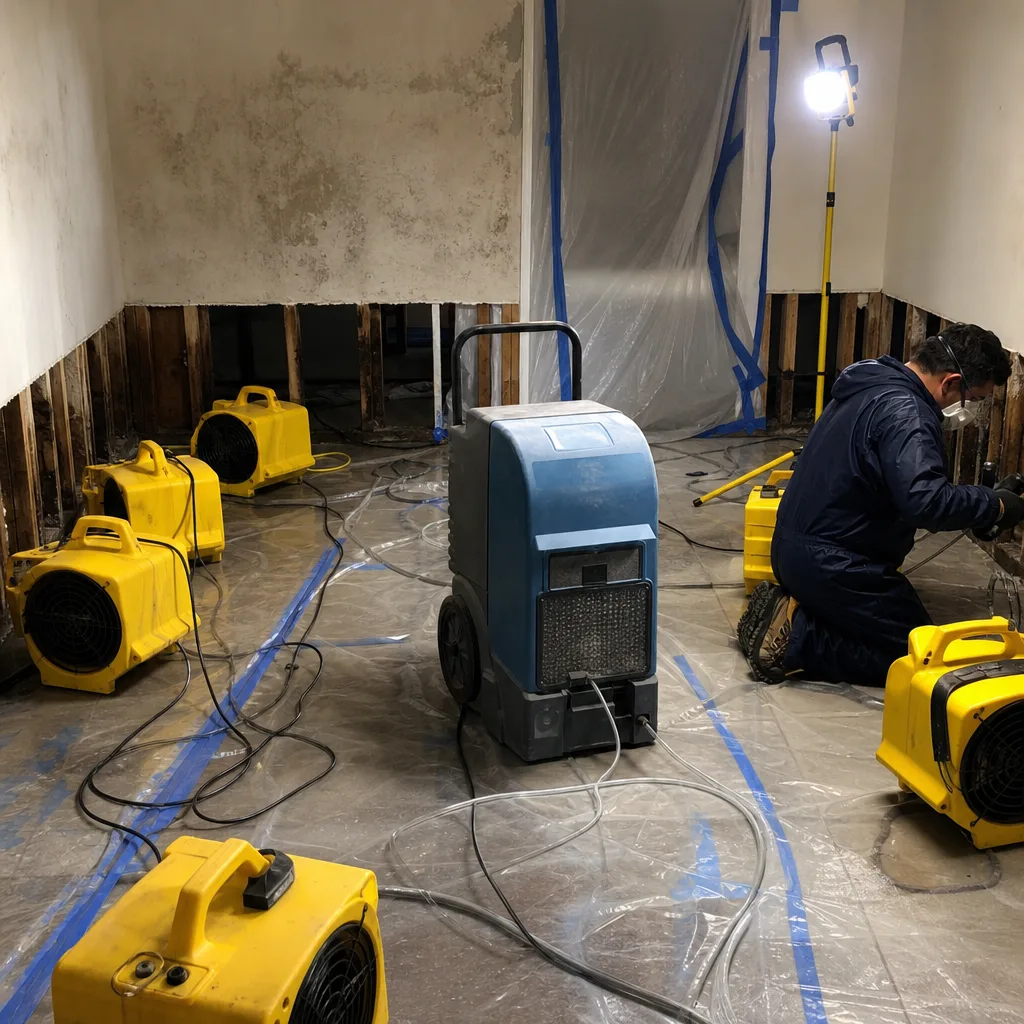
Our crews respond daily to Lakewood and the surrounding coastal basin: Long Beach to the south and west, Compton to the north, Signal Hill with its elevated exposure patterns, and Bellflower to the east where housing stock begins to mix with later construction eras. Each city gets the same documentation standard, adjusted for local conditions.
Serving Lakewood, CA - Our Local Coverage Area
We’re based in the Lakewood area and know this community well. Use the map below to see our service coverage - if you’re nearby, we can almost certainly help.
FAQs - Mold Remediation in Lakewood
Because Lakewood’s entire housing stock was built in a single 1950-1954 wave from repeated floor plans, the slab-embedded copper supply lines and cast-iron drains are all reaching end-of-life simultaneously. A failure on one block reliably predicts the same failure on adjacent blocks with identical plumbing. We track these clusters to pre-stage equipment and advise neighbors on preventive inspection timing. Call (562) 600-5083 if your street has seen recent slab leaks.
Mold colonization begins 24 to 48 hours after water intrusion, but in Lakewood’s marine-layer climate, that window can compress because baseline humidity already keeps materials closer to the threshold. The real danger is hidden migration - water travels 10-20 feet under slab flooring before surfacing, meaning mold is often established before the homeowner sees any visible sign. We recommend immediate moisture mapping on any warm spot, soft flooring, or unexplained humidity increase. Call (562) 600-5083 for same-day assessment.
No crawl space means no access to inspect or dry the underside of flooring. Water migrates laterally across the slab, affecting larger areas than the visible stain suggests, and wicks up drywall bases that must be removed to proper height. Our scopes specify square footage of affected flooring, linear feet of drywall removal, and the drying equipment capacity needed for the slab’s thermal mass. Every measurement is documented before work starts.
Yes. Lakewood’s marine-layer humidity, drawn inland from Long Beach, keeps indoor relative humidity 10-15% higher than inland cities on average. Materials that would dry in 72 hours in Cerritos may need 96-120 hours here. We adjust our psychrometric targets and equipment capacity for this coastal baseline, and we don’t clear a job until daily moisture logs confirm substrate readings below 16% MC for 48 consecutive hours. Rushing this step guarantees callback.
Document the water line with photos, remove vehicles and stored items to prevent contamination, and call for immediate assessment. Lakewood’s 1950s storm drainage can be overwhelmed by intense Pacific storms, and yard flooding often migrates through garage slabs and perimeter foundations into living spaces. We respond with extraction, perimeter drying, and moisture mapping to identify any slab penetration. The photo record starts on our first visit, and your written scope arrives before any demolition begins. Call (562) 600-5083 - live person, no voicemail.
Back to Dry Restoration operates under The Haven Standard, independently owned and operated since 2011. Every Lakewood job carries the 365-Day Done Right Promise: if it’s not done right, we make it right. That guarantee is written, signed, and stamped on your file - not a verbal assurance that evaporates after the crew leaves.
Written by Alicia Brennan, Owner at Back to Dry Restoration, serving Lakewood since 2011.