
Free visual inspection and a written scope of work before any mitigation begins - photos, moisture readings, and drying logs go in your claim file
The scope we write is the scope we bill. Anything new gets shown to you, in writing, before we touch it.
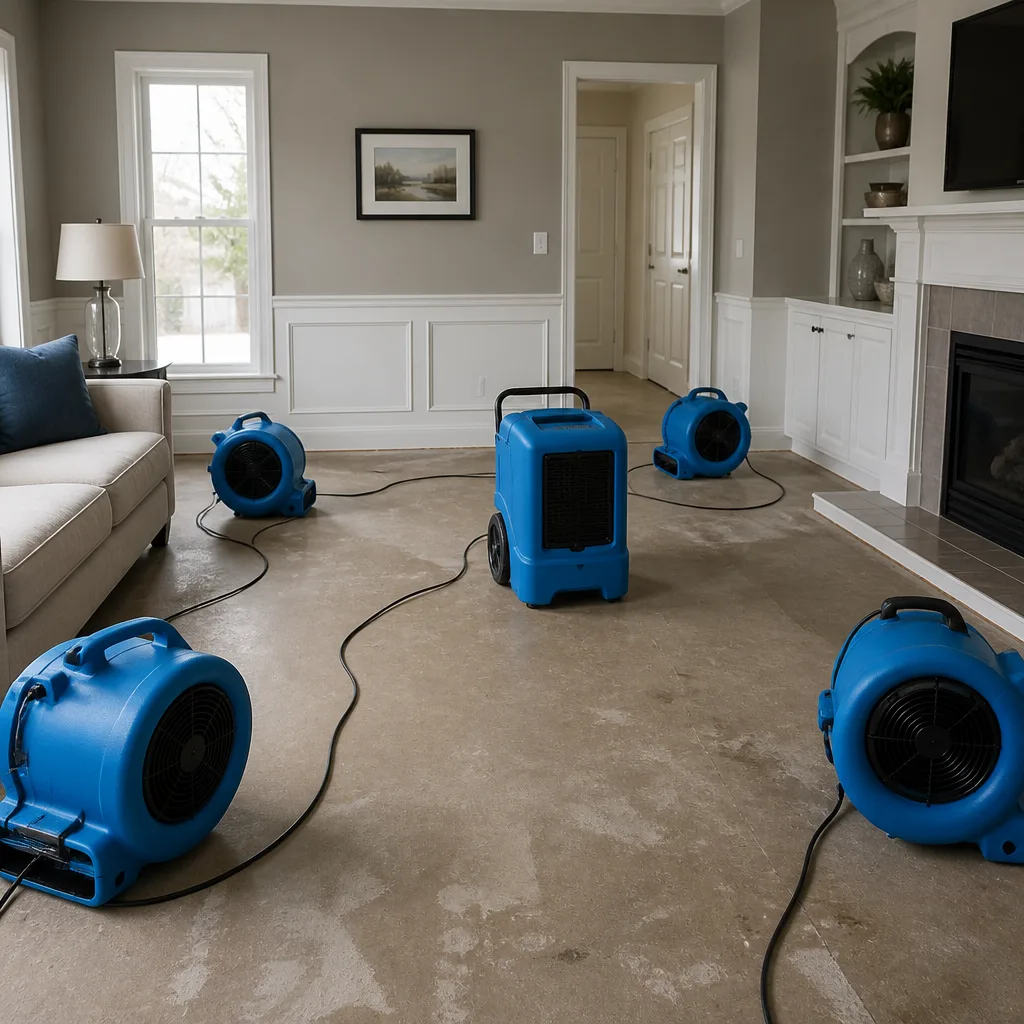

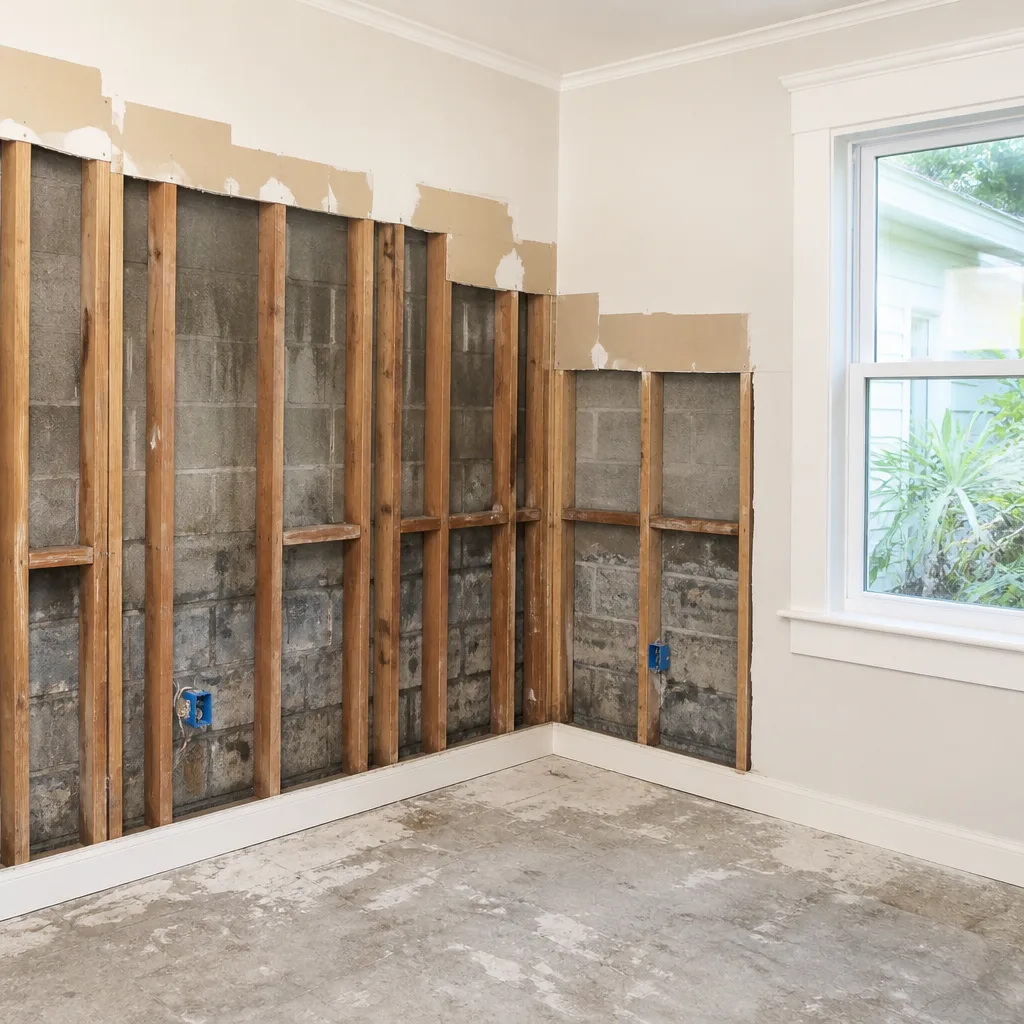
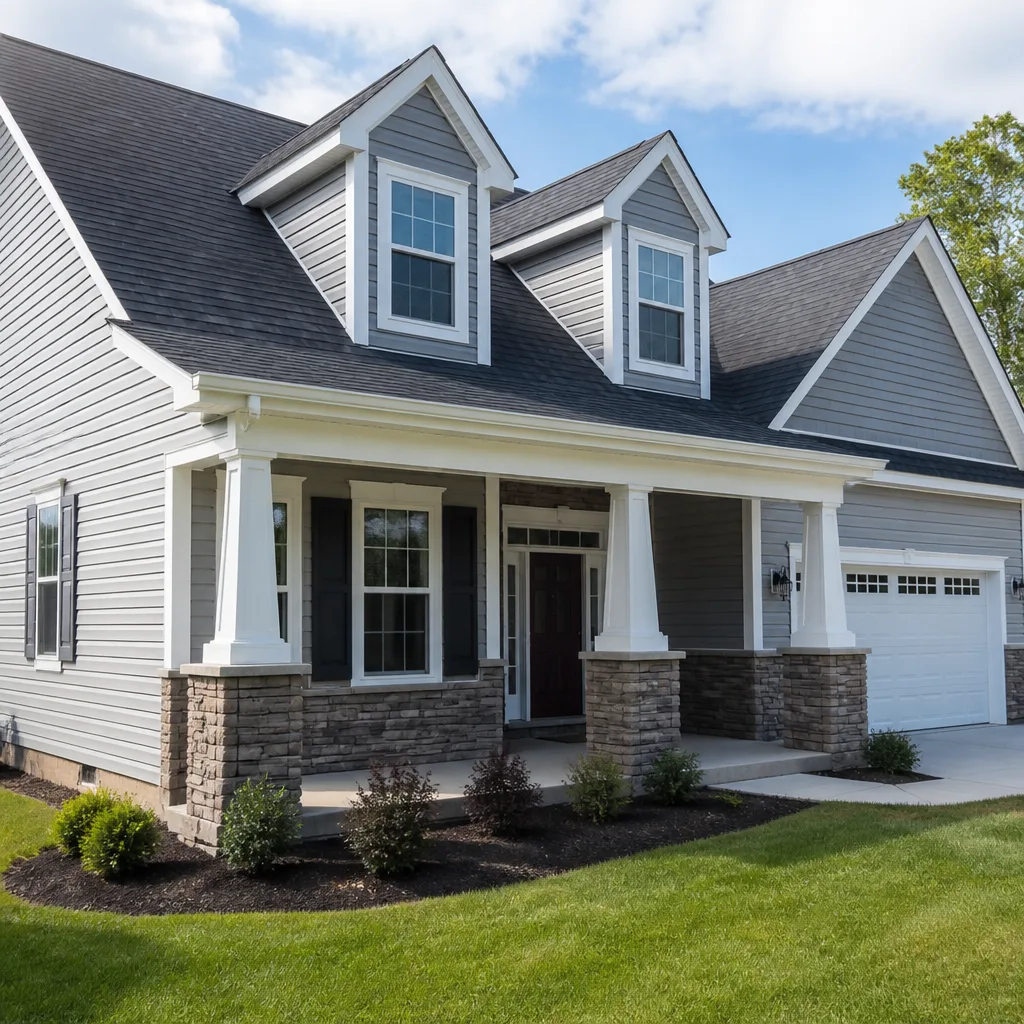
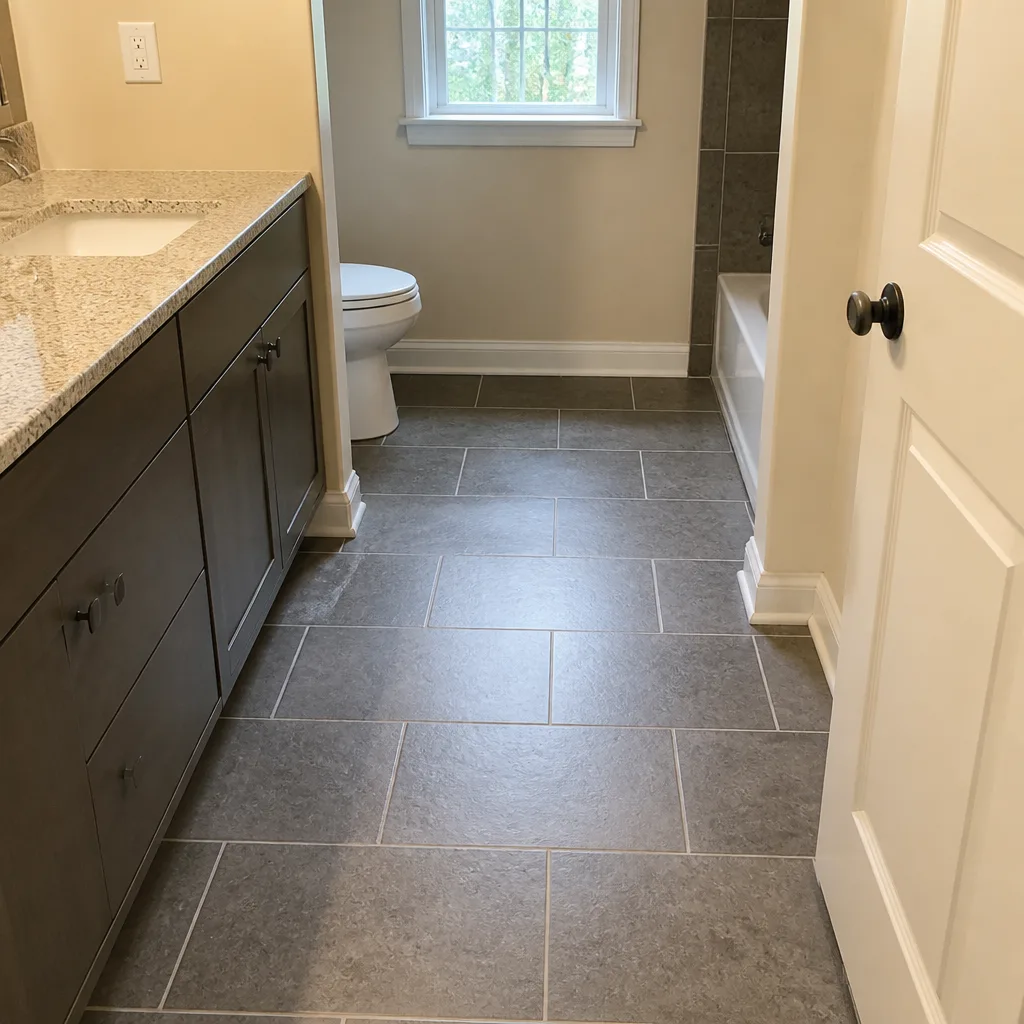

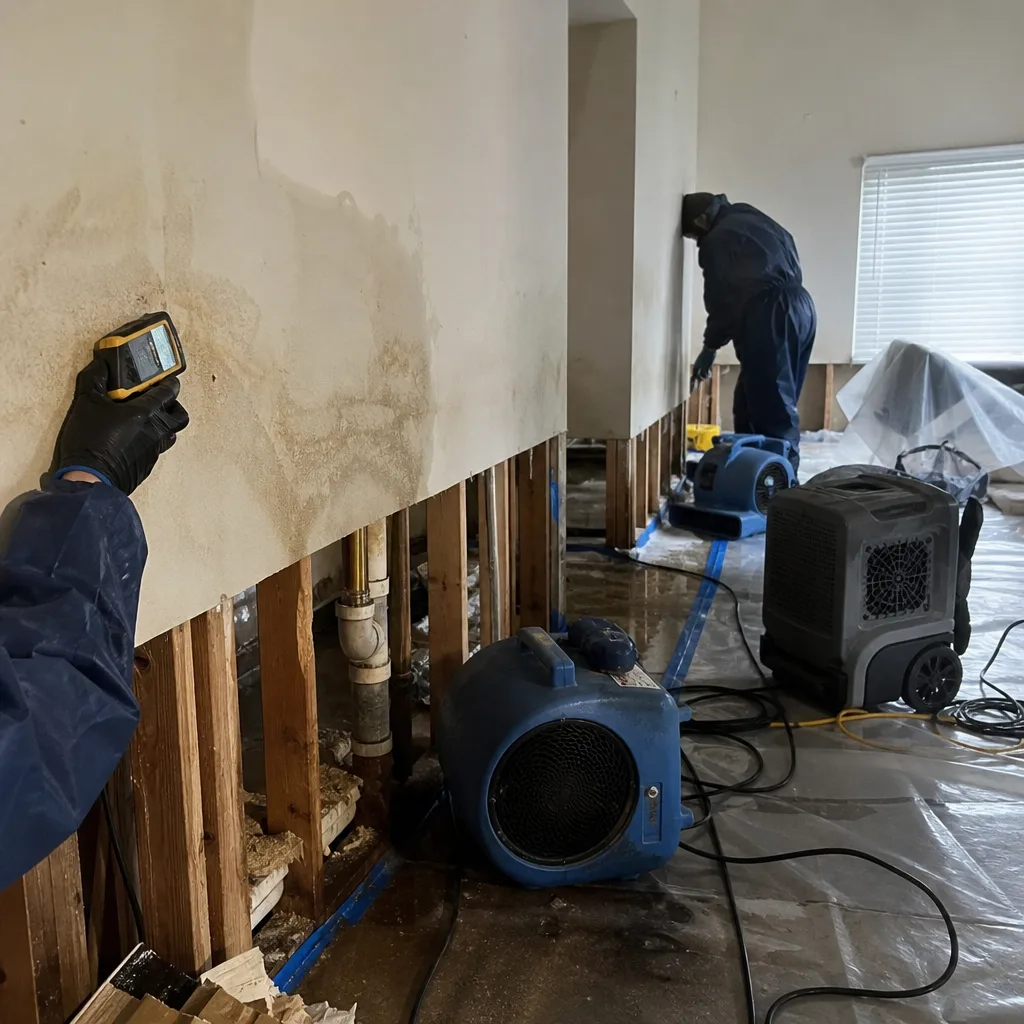 Before
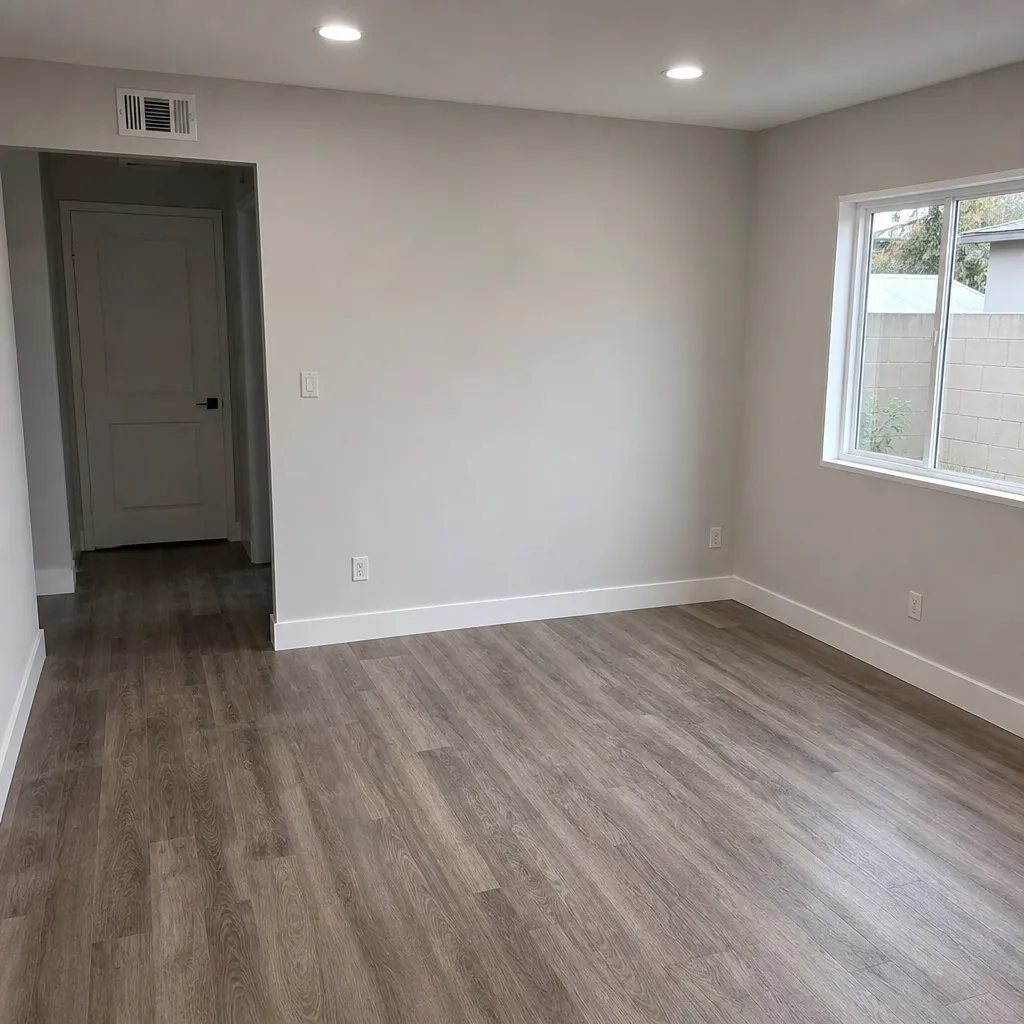 After
After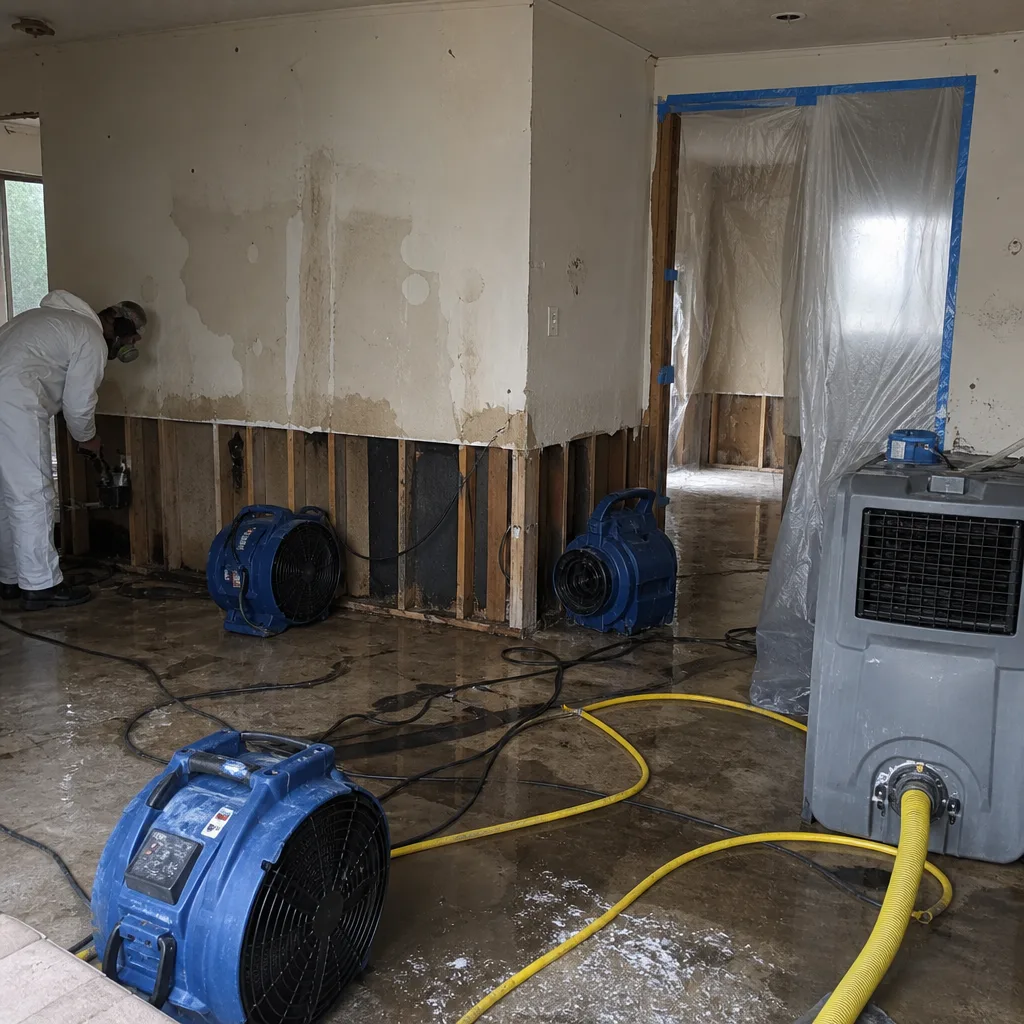 Before
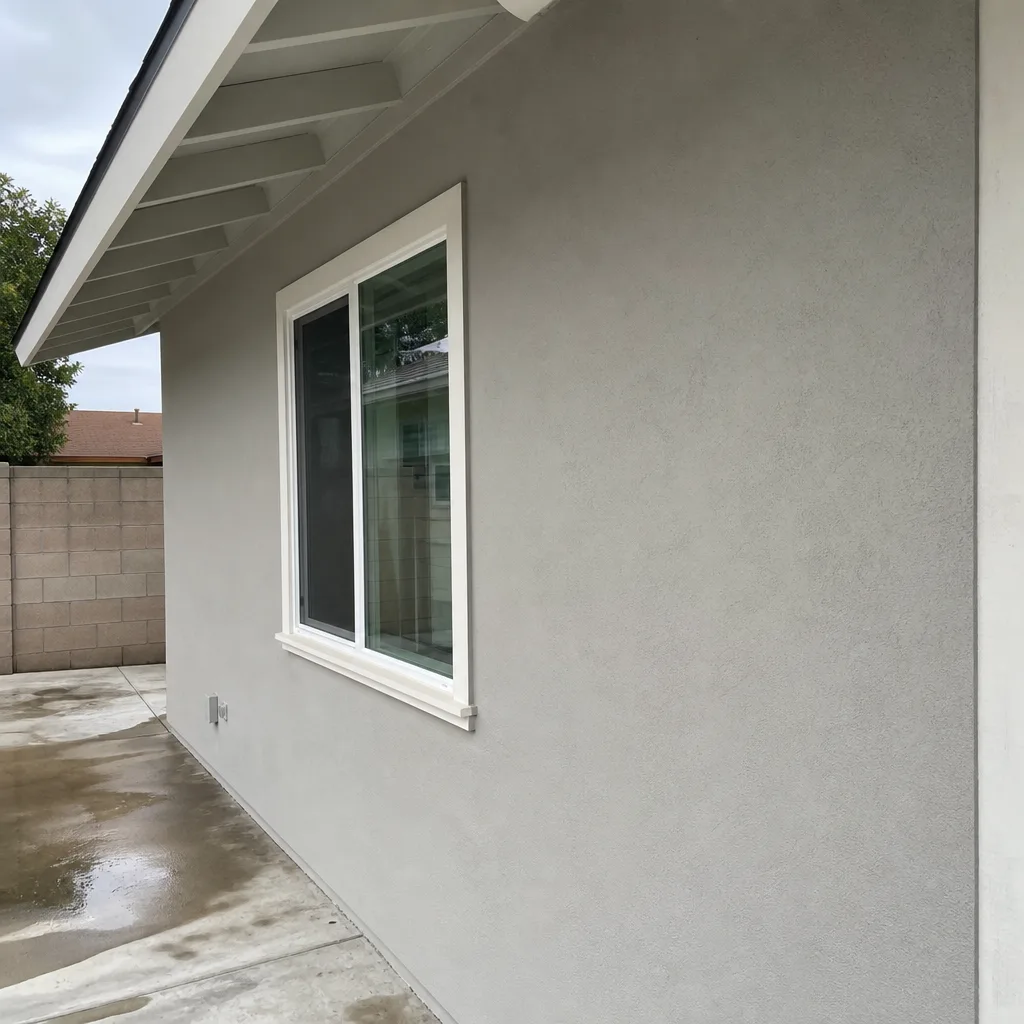 After
After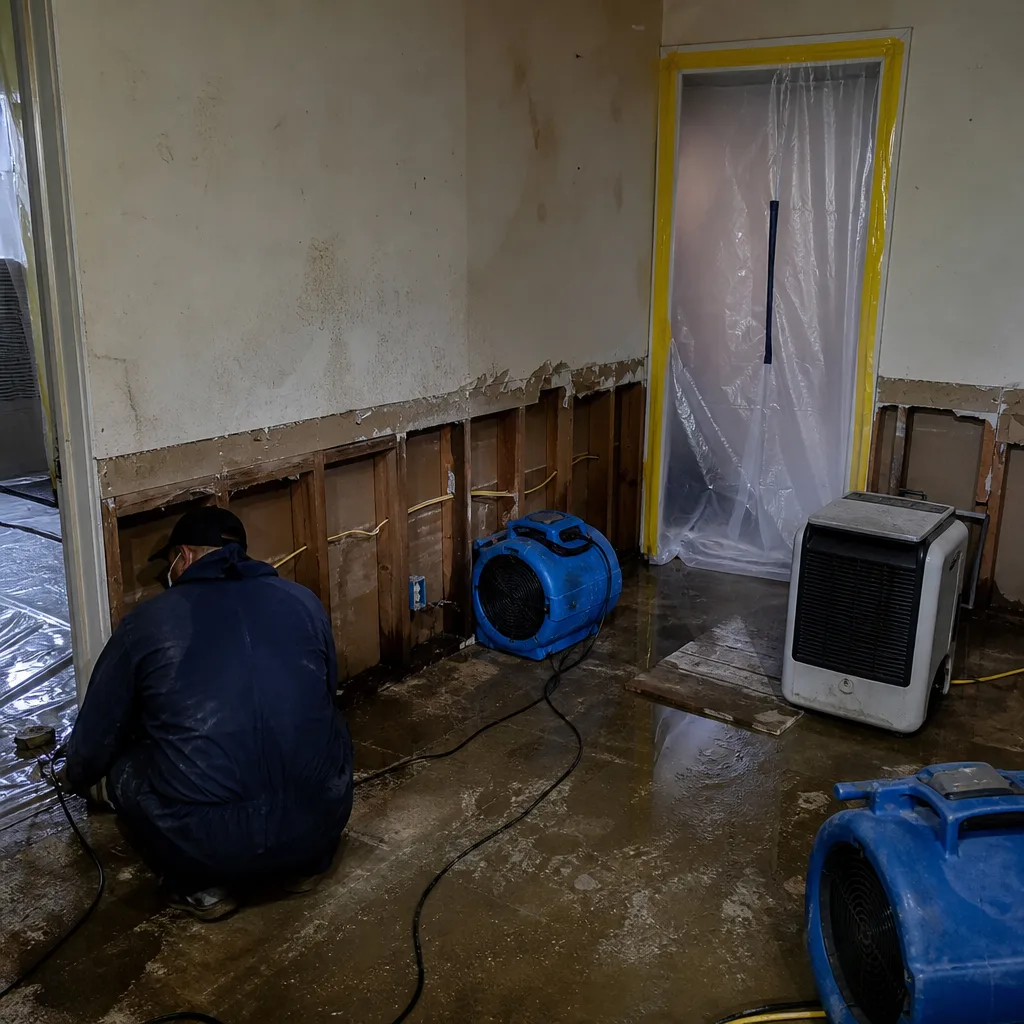 Before
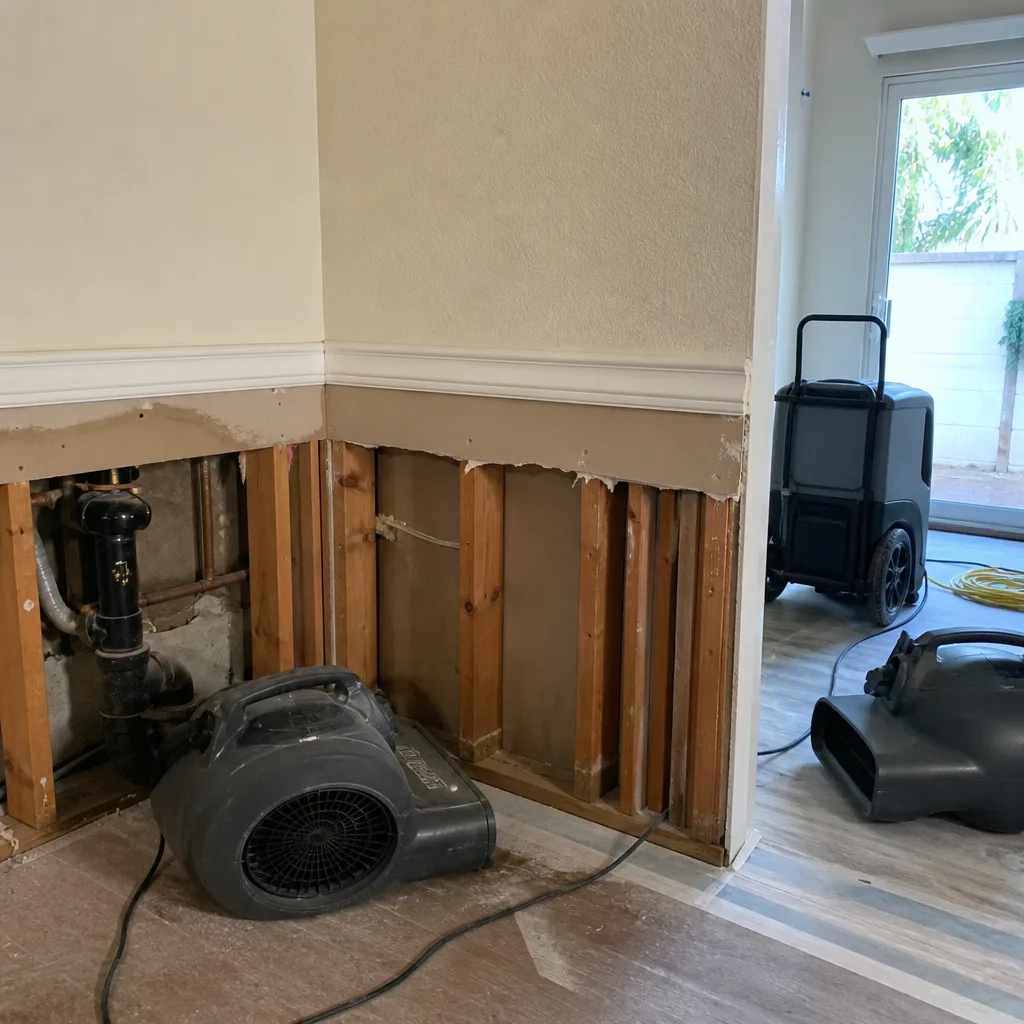 After
AfterFast, Reliable Water Damage Restoration Across Cerritos
Water damage restoration in Cerritos typically costs $2,800-$7,500 for a standard residential loss, with emergency extraction and drying crews available within 60-90 minutes of your call. Most Cerritos homes we see are 1960s-to-1980s ranch and two-story tract builds on post-tension concrete slabs, which means the visible leak is rarely the only problem. Call (562) 600-5083 and a live person will answer, document your loss, and dispatch a crew with a written price before any work begins.
We’re familiar with the flat alluvial plain that defines Cerritos, the minimal drainage gradient that traps El Niño runoff against slab perimeters, and the corroded copper supply lines that weep through micro-cracks in post-tension foundations for months before anyone notices. Our Water Damage Restoration team documents every job to IICRC, RIA, and IFA standards because we’ve seen what sloppy paperwork costs a homeowner when the adjuster reviews the file. Dispatch and scheduling are coordinated from our Los Angeles office; crews serve Cerritos locally and carry the equipment to handle both the emergency you called about and the hidden one we often find underneath.
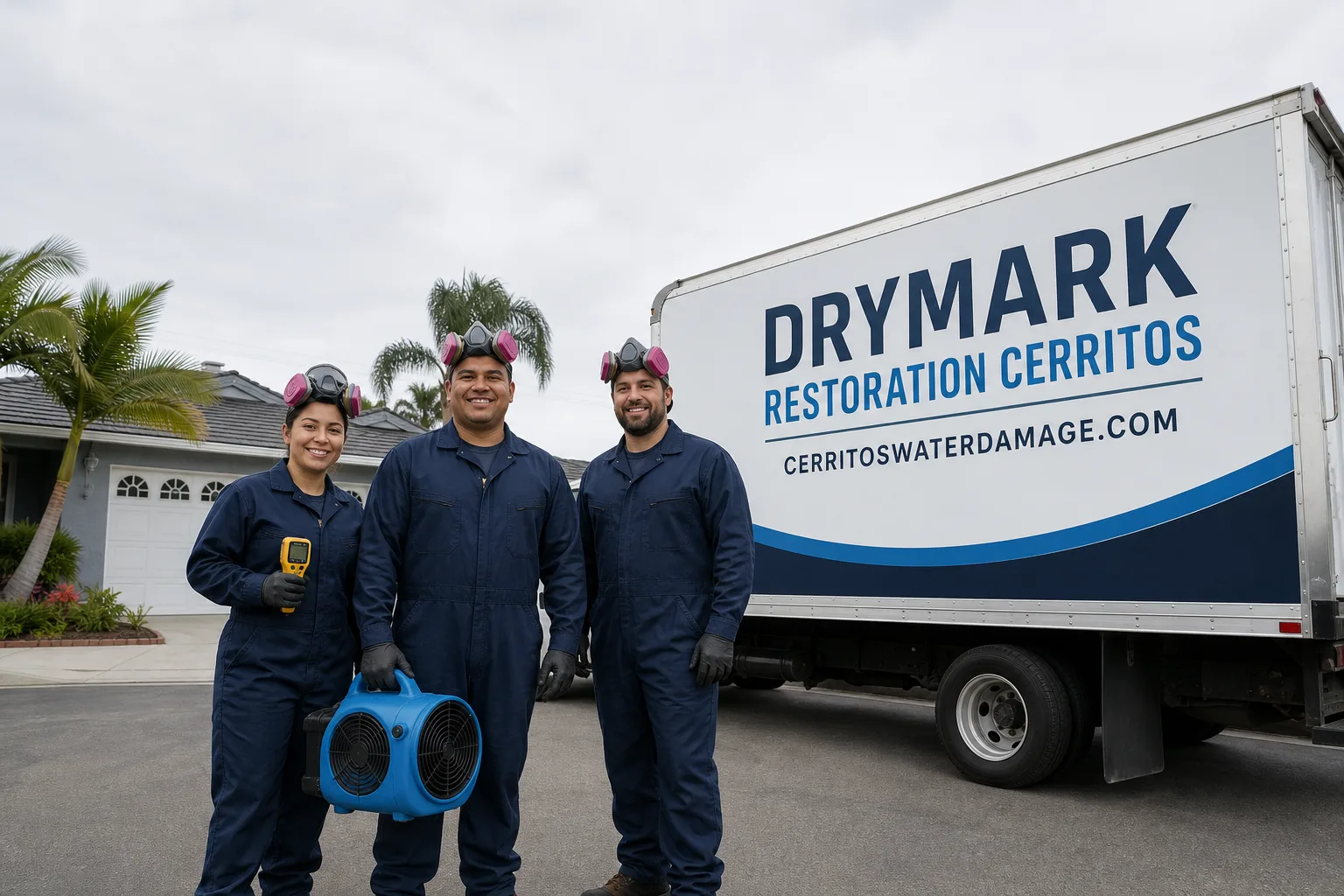
Why DryMark Restoration Cerritos Is Cerritos’s Preferred Water Damage Restoration Company
Back to Dry Restoration, led by Alicia Brennan and operating under The Haven Standard since 2011, has restored more than 12,000 homes - every one with a written price before work started and a documented photo record when the crew left. Our Cerritos customers know us for the daily drying logs that turn restoration invoices into payable insurance claims, not for promises we can’t put in writing.
Response time to Cerritos averages under 90 minutes because our crews know the grid: Alondra Boulevard to the north, South Street to the south, the 605 corridor, and the neighborhoods around Cerritos Park East where 1970s ranch homes sit on the same liquefaction-prone soil that creates their unique water damage profile. We don’t guess at moisture levels; we measure them with calibrated meters and log the readings.
Our technicians are background-checked, uniformed, and licensed - their license numbers are available on request. Every call reaches a live person, 24 hours a day, 7 days a week, with no voicemail trees while water is still moving through your walls. And Haven Standard, Clause 1 applies on every Cerritos job: a written price delivered before anyone starts work, with no scope-creep additions once the crew is inside your home.
Our Water Damage Restoration Services in Cerritos
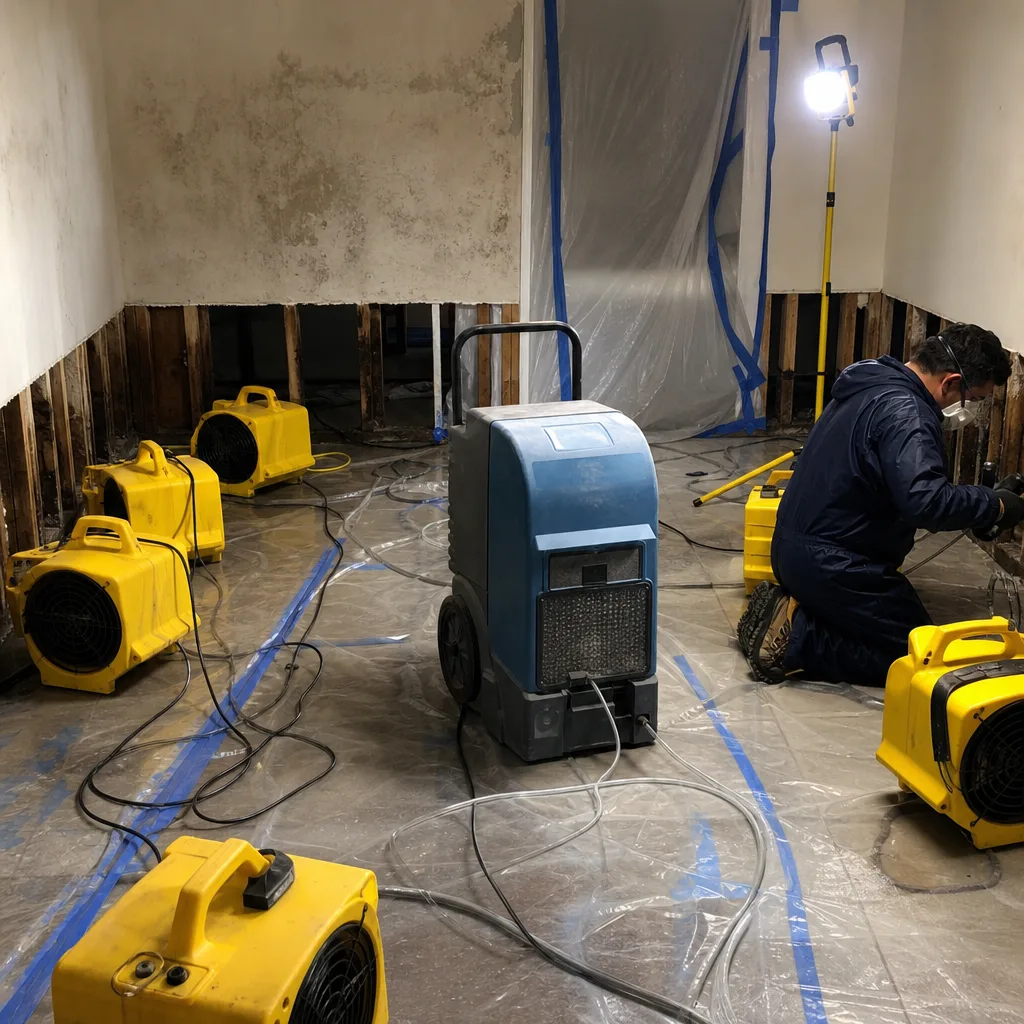
Emergency Water Extraction
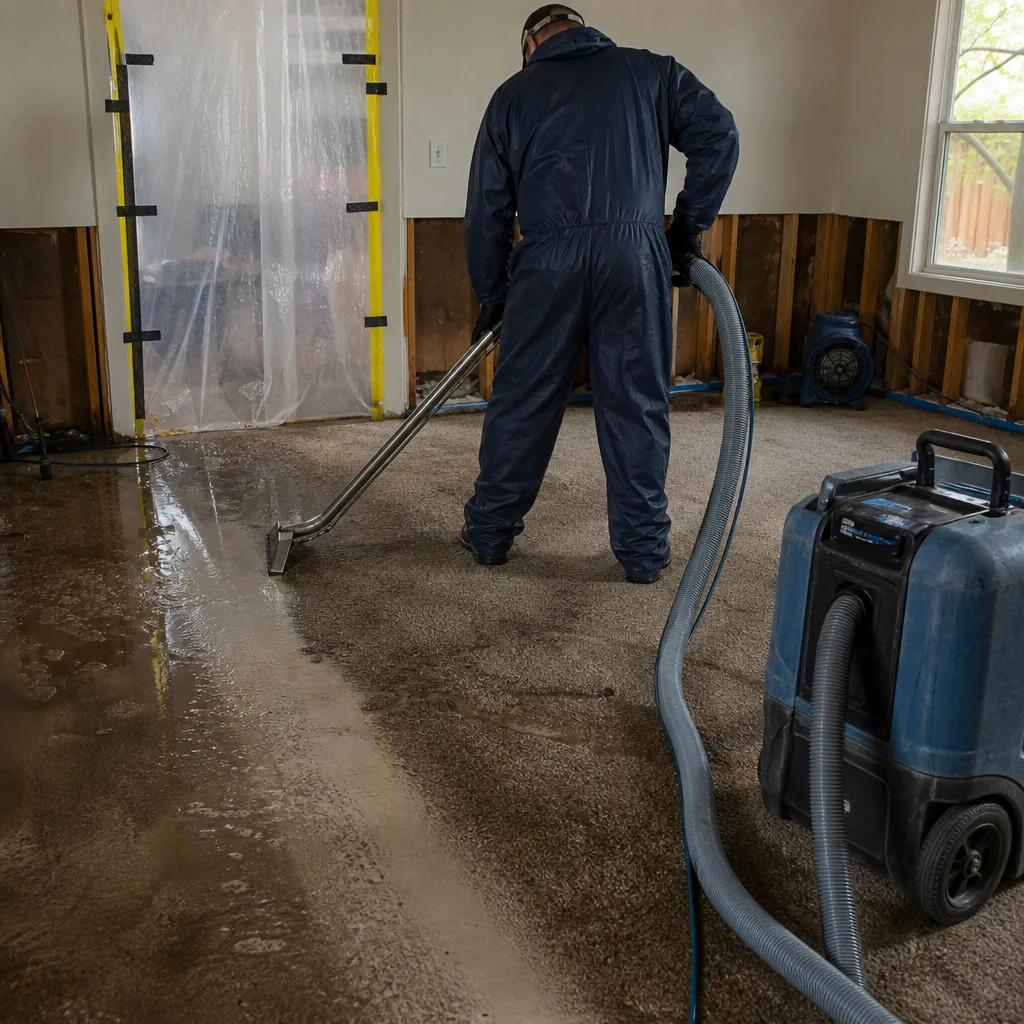
When a supply line bursts in a Cerritos kitchen or an El Niño pulse pushes water through a garage door seal, speed matters - but so does documentation. We extract standing water with truck-mounted and portable systems, then immediately begin moisture mapping of the affected area and the surrounding slab. In Cerritos, we never stop at the visible wet spot. The same soil conditions that created the liquefaction hazard zone also create the micro-cracks that hide secondary leaks, so our extraction protocol includes perimeter slab inspection as standard practice, not an upsell.
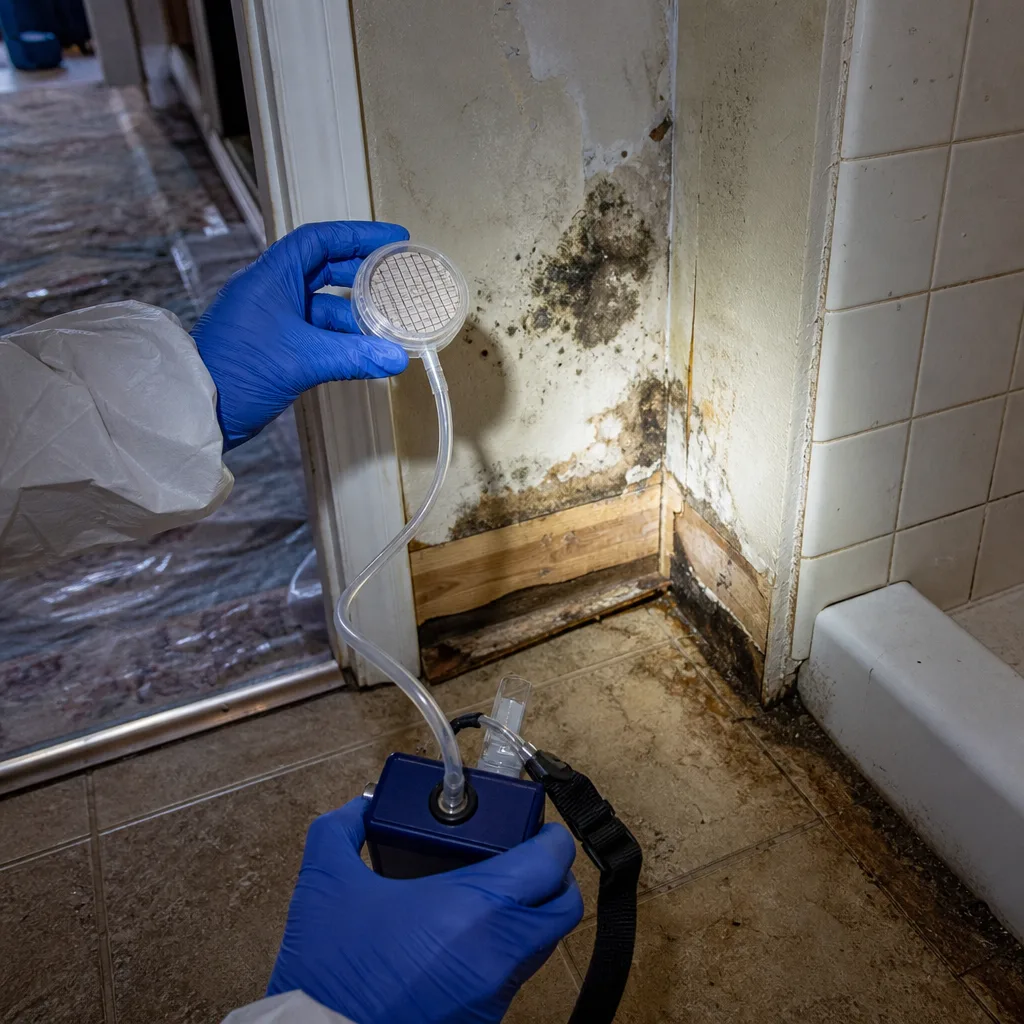
Structural Drying & Dehumidification
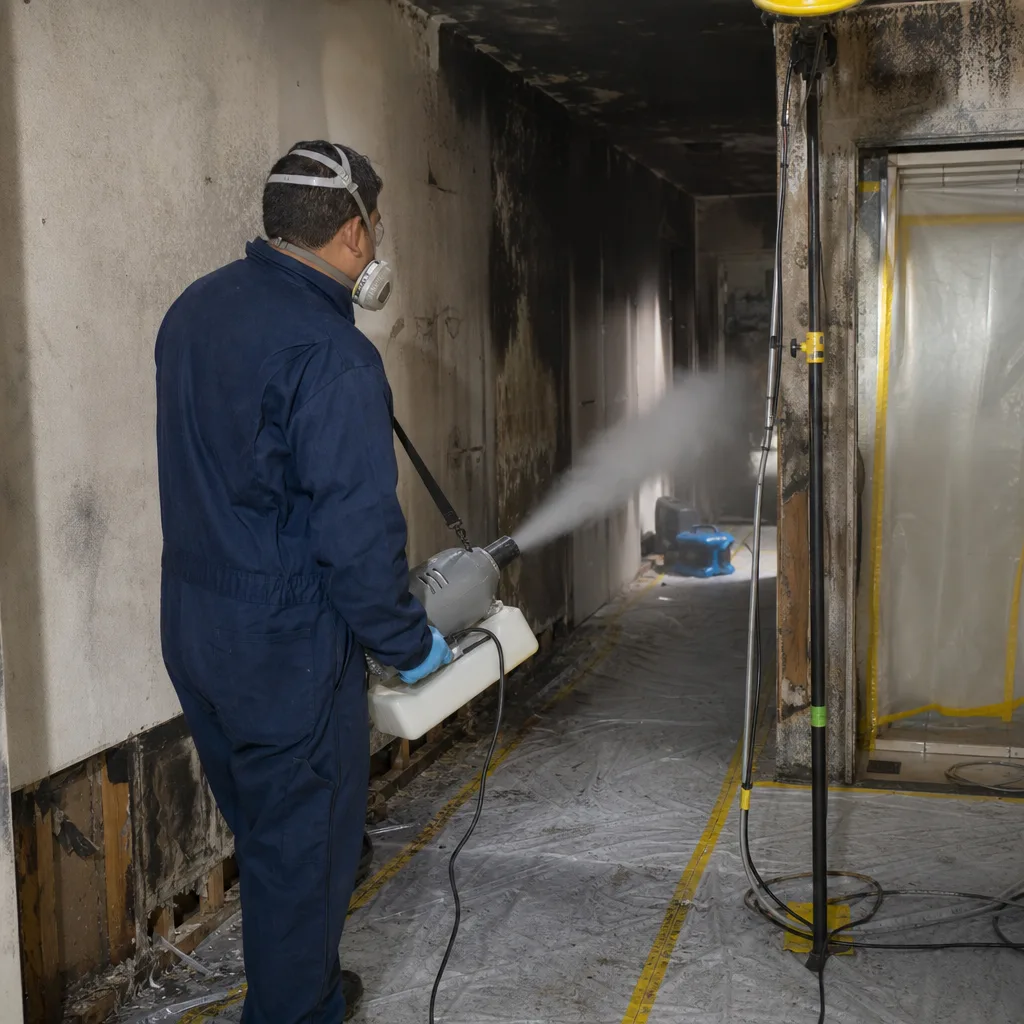
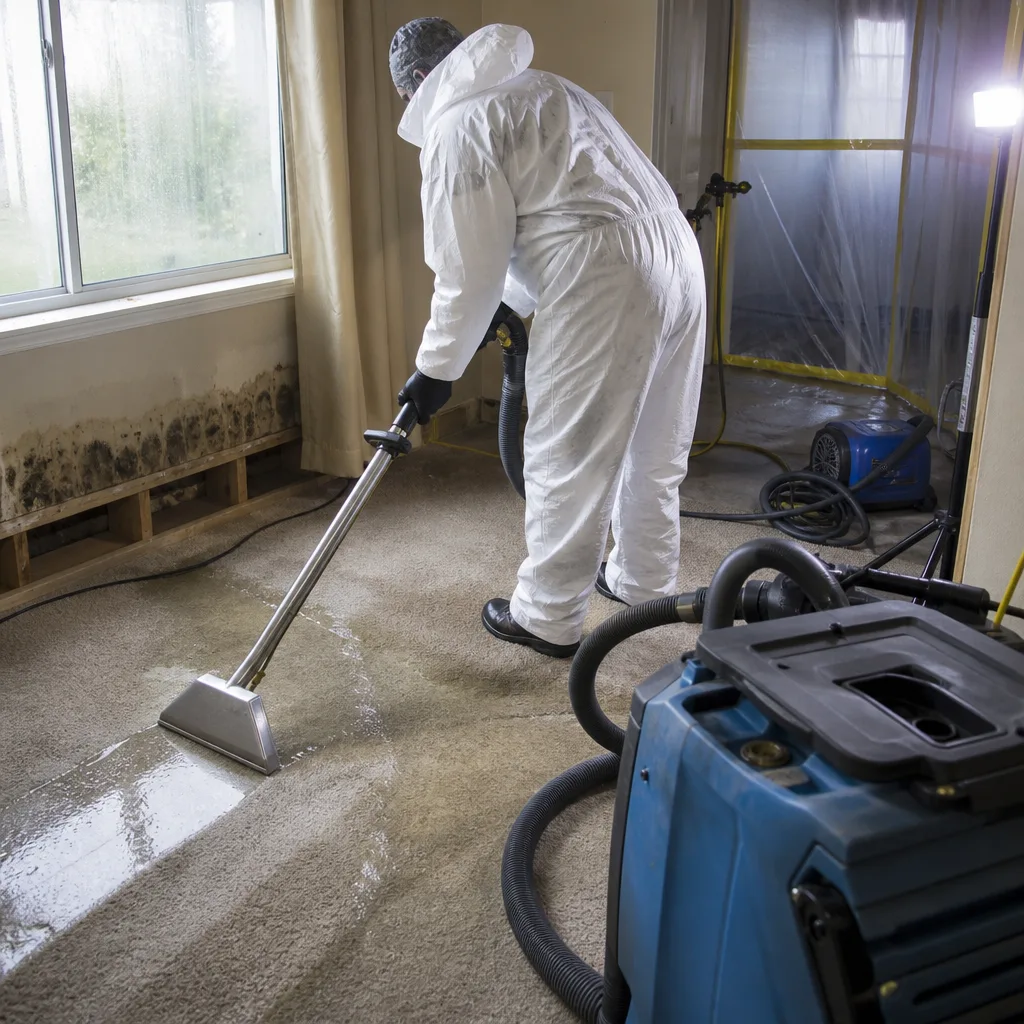
Cerritos’s marine-influenced humidity means poorly ventilated 1970s wall cavities stay wet longer than homeowners expect. We size our drying systems to the actual psychrometric conditions - that’s the measurement of temperature, humidity, and vapor pressure that determines how fast materials release moisture. Our crews deploy Dri-Eaz and Phoenix dehumidifiers, B-Air air movers, and Injectidry cavity drying systems sized to the cubic footage and material class of your specific loss. Daily moisture logs track every reading until framing and subfloors return to pre-loss equilibrium, typically 3-5 days for a Category 1 water loss in Cerritos’s climate.
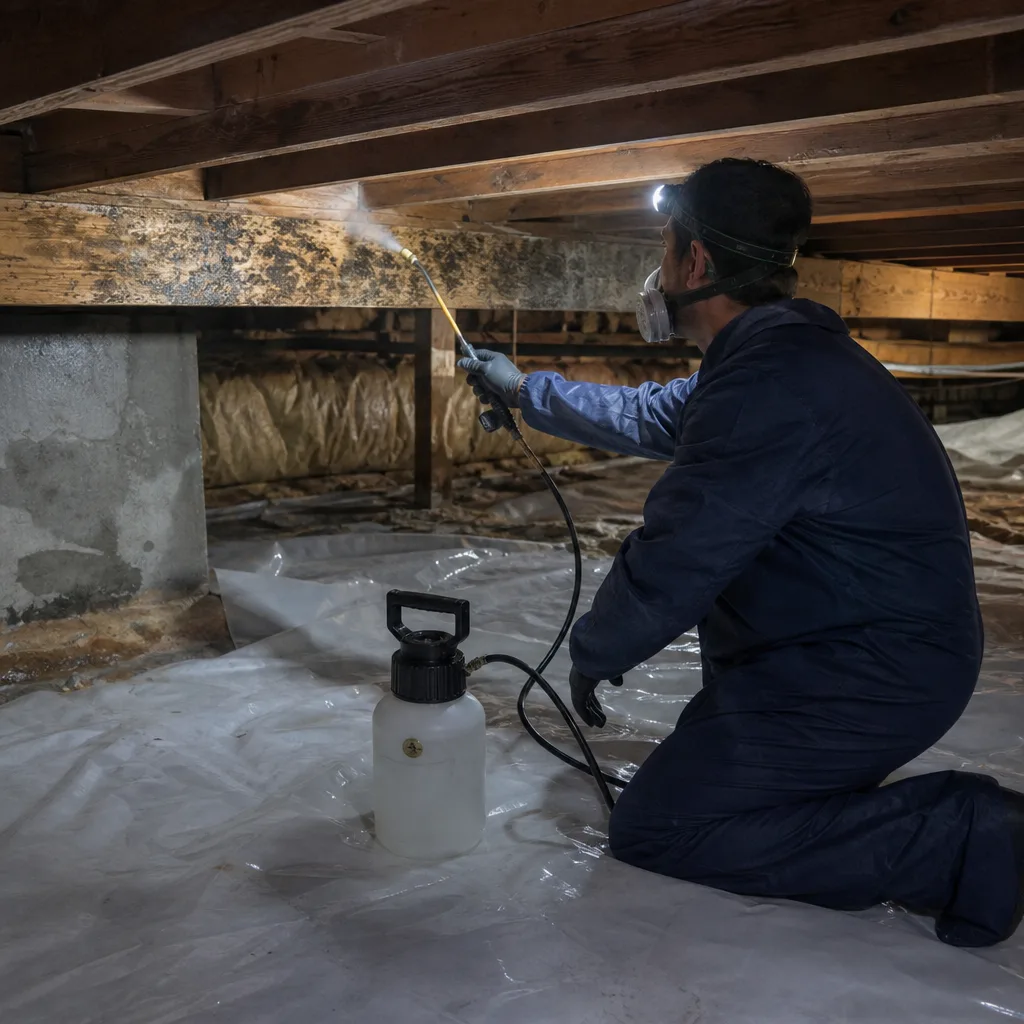
Flood Cleanup
The flat alluvial plain of Cerritos has almost no natural drainage gradient. When heavy rain hits, water pools against slab perimeters and finds its way into garages, finished rooms, and crawl spaces that were never designed to shed it. Our flood cleanup in Cerritos addresses both the immediate extraction and the perimeter intrusion path - sealing, grading recommendations, and documentation of the hydrostatic pressure pattern for your insurance file. We treat Category 2 and Category 3 flood losses with the antimicrobial protocols and protective equipment those classifications require, and we photograph every stage.
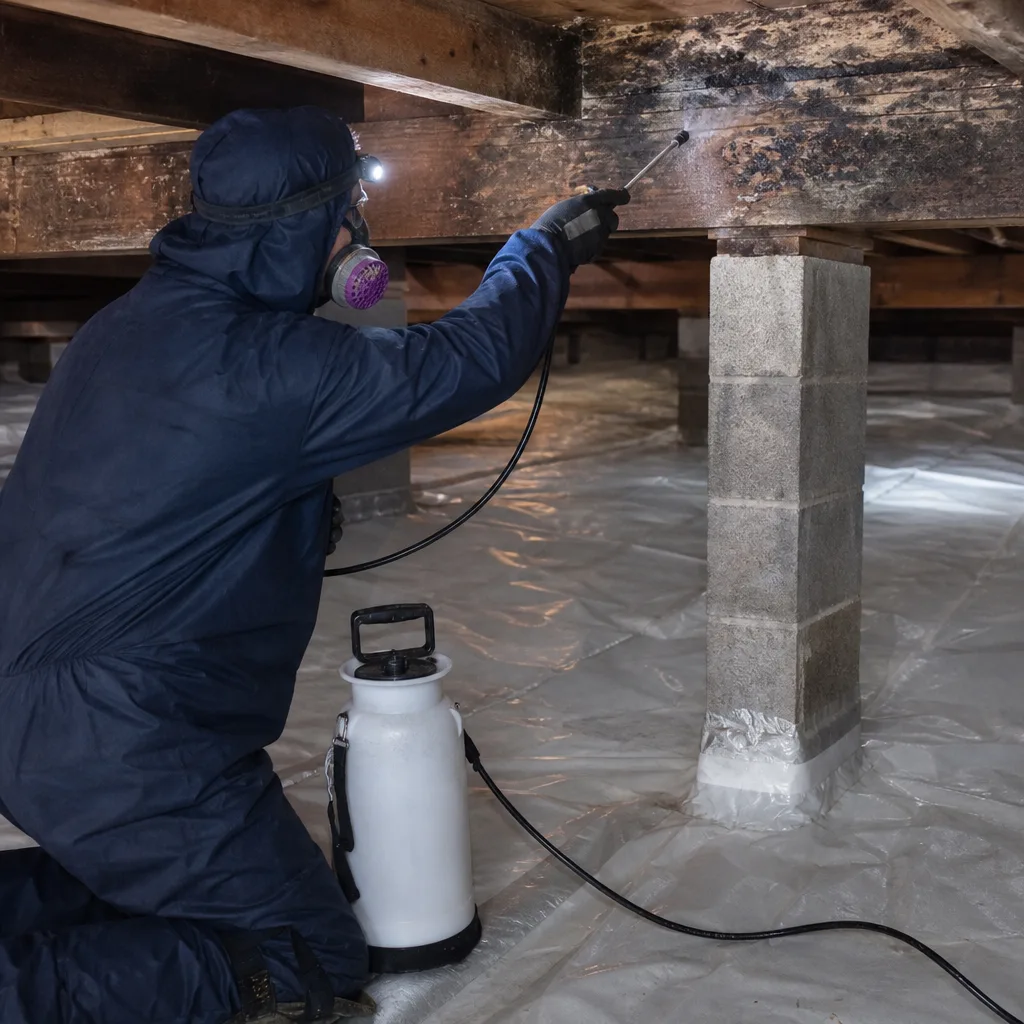
Burst Pipe Restoration
Cerritos’s moderately hard water corrodes copper supply lines from the inside, and the post-tension slab micro-cracks let those lines weep for months before a visible failure forces the call. Our burst pipe restoration protocol starts with isolation of the failed section, then expands to pressure-test the entire slab loop and inspect adjacent lines with thermal imaging. We’ve learned that a single water loss call in Cerritos often hides two problems: the burst that caused the visible damage and the slow-weeping slab leak that preconditioned the area. We document both, quote both in writing under Haven Standard, Clause 1, and restore both - because drying over an active leak is wasted money and a failed claim.
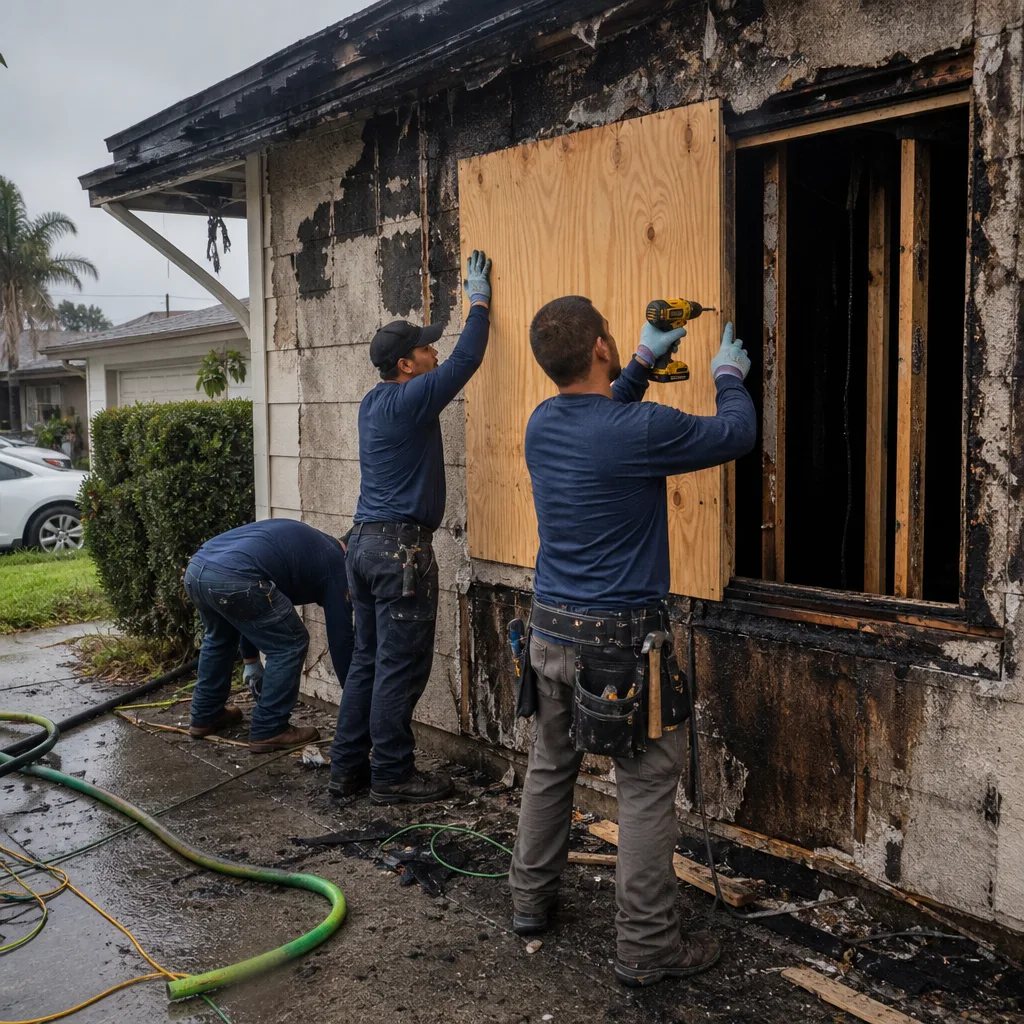
Basement Water Removal
True basements are rare in Cerritos’s single-story-dominant housing stock, but converted garages, sunken living rooms, and below-grade additions in neighborhoods near the Cerritos Auto Square present similar challenges. These spaces sit at or below the slab perimeter water line, making them vulnerable to the same pooling and hydrostatic pressure patterns. We extract, dry, and document with the same moisture-mapping rigor we apply to full basement losses in other markets.
Ceiling & Roof Leak Water Damage
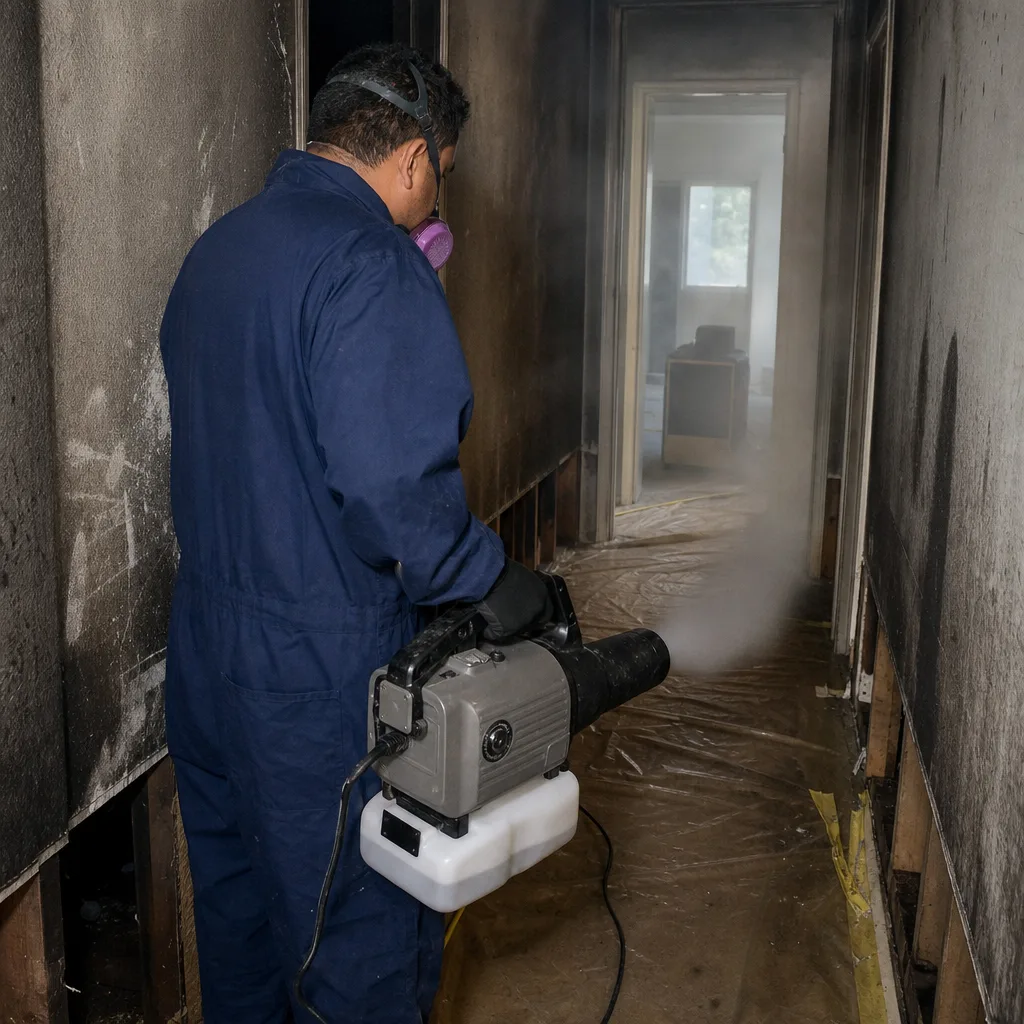
Cerritos’s 1960s-to-1980s roof stock is aging into the replacement window, and the marine layer accelerates fastener corrosion and underlayment failure. When a roof leak saturates ceiling drywall, we remove the damaged material, dry the cavity with directed airflow and dehumidification, and map the full extent of the water trail - which in flat Cerritos construction often travels farther across the attic plane than homeowners expect.
What happens when you call
- 1
A real person answersNo phone trees - you reach a local pro.
- 2
You get an upfront price rangeHonest numbers before anyone is dispatched.
- 3
A background-checked tech heads outLicensed & insured, dispatched right away.
- 4
You approve before work beginsNothing starts until you say go.
BeforeAfterTrusted Brands We Service in Cerritos
Our equipment fleet includes professional-grade drying systems from Dri-Eaz, Phoenix, and B-Air - brands chosen for the documented performance data they produce, not for marketing claims. Every machine’s output is logged against IICRC, RIA, and IFA standards so your adjuster can verify that drying met protocol. We stock replacement components locally for Cerritos jobs, which means no waiting for parts when a dehumidifier or air mover needs swapping mid-project. The daily drying logs we generate from this equipment become the evidence that turns your restoration invoice into a paid claim.
Common Water Damage Restoration Problems We See in Cerritos Homes
- Moisture mapping stops at the visible leak. Crews unfamiliar with Cerritos’s liquefaction-zone slabs check the failed water heater or burst supply line, set drying equipment, and leave. They never pressure-test the post-tension slab for the corroded copper line weeping through micro-cracks a few feet away. The home dries slowly, mold colonizes, and the insurance claim gets complicated when the second leak finally reveals itself.
- Drying is scoped too light for Cerritos humidity. The marine influence keeps ambient moisture high enough that undersized dehumidification or premature equipment removal leaves 1970s wall cavities wet past the 24-to-48-hour window where mold takes hold. We size systems to the psychrometric data, not to square-footage guesses.
- El Niño perimeter flooding gets treated as a one-time event. Water pools against the slab on Cerritos’s flat plain, enters through gaps and joints, and gets extracted. But crews that don’t identify the intrusion path - the negative grade, the failed seal, the hydrostatic pressure pattern - leave the homeowner with a recurring problem and a denied secondary-damage claim.
- Category misclassification on appliance leaks. A dishwasher or washing machine line in a Cerritos home may start as Category 1 clean water, but if the machine hasn’t been maintained or the leak has gone undetected behind cabinets, it can degrade to Category 2 or 3 before anyone calls. We test and document the classification at arrival, because the wrong category means the wrong protocol and a rejected invoice.
Pricing for Water Damage Restoration in Cerritos, CA
Emergency water extraction and initial stabilization in Cerritos typically runs $800-$1,800 depending on affected square footage and water classification. Structural drying and dehumidification for a standard residential loss adds $1,500-$3,200 for a 3-5 day protocol with daily moisture logging. Burst pipe restoration, including slab leak detection and repair coordination, ranges $2,800-$5,500. Full flood cleanup with Category 2 or 3 contamination, antimicrobial treatment, and contents processing can reach $4,500-$7,500.
What moves a Cerritos job within these ranges: the water classification (Category 1, 2, or 3), the square footage of affected materials, whether a hidden slab leak requires detection and repair, and the documentation level your insurance carrier expects. Haven Standard, Clause 1 applies on every job: we deliver a written price before any work begins, with no exceptions. Bring a competitor’s written estimate and we’ll provide a Free Second Opinion at no charge. Call (562) 600-5083 for an exact quote - estimates are free.
We Also Serve Cities Near Cerritos
Our crews respond daily to Water Damage Restoration in Cerritos and the surrounding communities: Artesia to the west, La Palma to the north, Bellflower to the east, and Buena Park to the southeast. Each city presents different soil conditions, housing stock, and water damage patterns - our scopes are written to the specific property, not templated across zip codes.
Serving Cerritos, CA - Our Local Coverage Area
We’re based in the Cerritos area and know this community well. Use the map below to see our service coverage - if you’re nearby, we can almost certainly help.
FAQs - Water Damage Restoration in Cerritos
Cerritos sits on loose San Gabriel River alluvial deposits in a state-designated liquefaction hazard zone, so the post-tension concrete slabs beneath most homes have developed micro-cracks over decades of minor seismic settlement. Those cracks let corroded copper supply lines weep slowly, often for months, before a separate visible leak finally prompts the homeowner to call. Our protocol includes slab pressure-testing and thermal imaging on every Cerritos job to catch the hidden leak before we quote drying work that would fail over an active source. Call (562) 600-5083 and we’ll inspect both problems - with a written price for each before any work starts.
Mold colonization typically begins 24 to 48 hours after water intrusion in Cerritos’s marine-influenced climate, where ambient humidity already runs higher than inland communities and poorly ventilated 1970s wall cavities retain moisture longer. The flat alluvial plain’s minimal drainage gradient also means water that enters through slab perimeters or foundation gaps stays in contact with materials longer than it would on sloped terrain. We set drying equipment within hours, not days, and log daily moisture readings until materials hit pre-loss equilibrium - the documentation that proves to your adjuster that mold prevention was handled properly. Call (562) 600-5083 for emergency dispatch.
Yes - Cerritos’s minimal natural drainage gradient means heavy rainfall pulses, especially during El Niño winters, cause slower surface water dispersal than in hillside communities like parts of Buena Park or Bellflower. Water pools against slab perimeters, enters through garage door seals and foundation joints, and can re-intrude after initial extraction if the perimeter path isn’t identified and documented. Our Cerritos flood scopes include hydrostatic pressure mapping and intrusion-path documentation as standard, not optional add-ons. Call (562) 600-5083 for a written scope that addresses both the water and why it entered.
It starts with moisture mapping of all affected materials, then expands to pressure-testing the slab’s copper supply loop and thermal imaging for temperature anomalies that indicate hidden leaks. The written scope specifies equipment by brand and capacity - Dri-Eaz or Phoenix dehumidifiers, B-Air air movers, Injectidry cavity systems - sized to the cubic footage and material class. Daily drying logs track moisture content, relative humidity, and vapor pressure differential until pre-loss readings are restored. A documented photo record accompanies every visit. Haven Standard, Clause 1 requires the full written price before work begins; no exceptions for Cerritos slab homes. Call (562) 600-5083 to schedule documentation.
We test at arrival using calibrated meters and visual inspection protocols - Category 1 is clean water from a supply line, Category 2 carries significant contamination from appliance surfaces or delayed discovery, and Category 3 is grossly contaminated from sewage or ground flooding. In Cerritos’s 1970s homes, appliance leaks often hide behind cabinets for days or weeks, allowing Category 1 to degrade to Category 2 before anyone calls. We document the classification with photographs and meter readings, then scope the appropriate antimicrobial treatment and protective equipment. The wrong category means the wrong protocol and a denied claim, so we verify before we quote. Call (562) 600-5083 for classification and a written scope.
On a 1970s ranch home off Alondra Boulevard near Cerritos Park East, our techs ran moisture mapping across the post-tension slab and found the wet drywall from a failed water heater supply line masked a slow-weeping copper slab leak a few feet away. We extracted standing water, set Dri-Eaz and Phoenix air movers with dehumidification under containment, applied antimicrobial treatment to the wetted wall cavities, and logged daily moisture readings until the slab and framing hit pre-loss condition. The homeowner’s adjuster paid the full invoice because the documentation was complete - moisture logs, photo record, written scope, and the signed 365-Day Done Right Promise under The Haven Standard.
Written by Alicia Brennan, Owner at Back to Dry Restoration, serving Cerritos since 2011 under The Haven Standard.