
Last updated September 23, 2026
Free visual inspection and a written scope of work before any mitigation begins - photos, moisture readings, and drying logs go in your claim file
The scope we write is the scope we bill. Anything new gets shown to you, in writing, before we touch it.
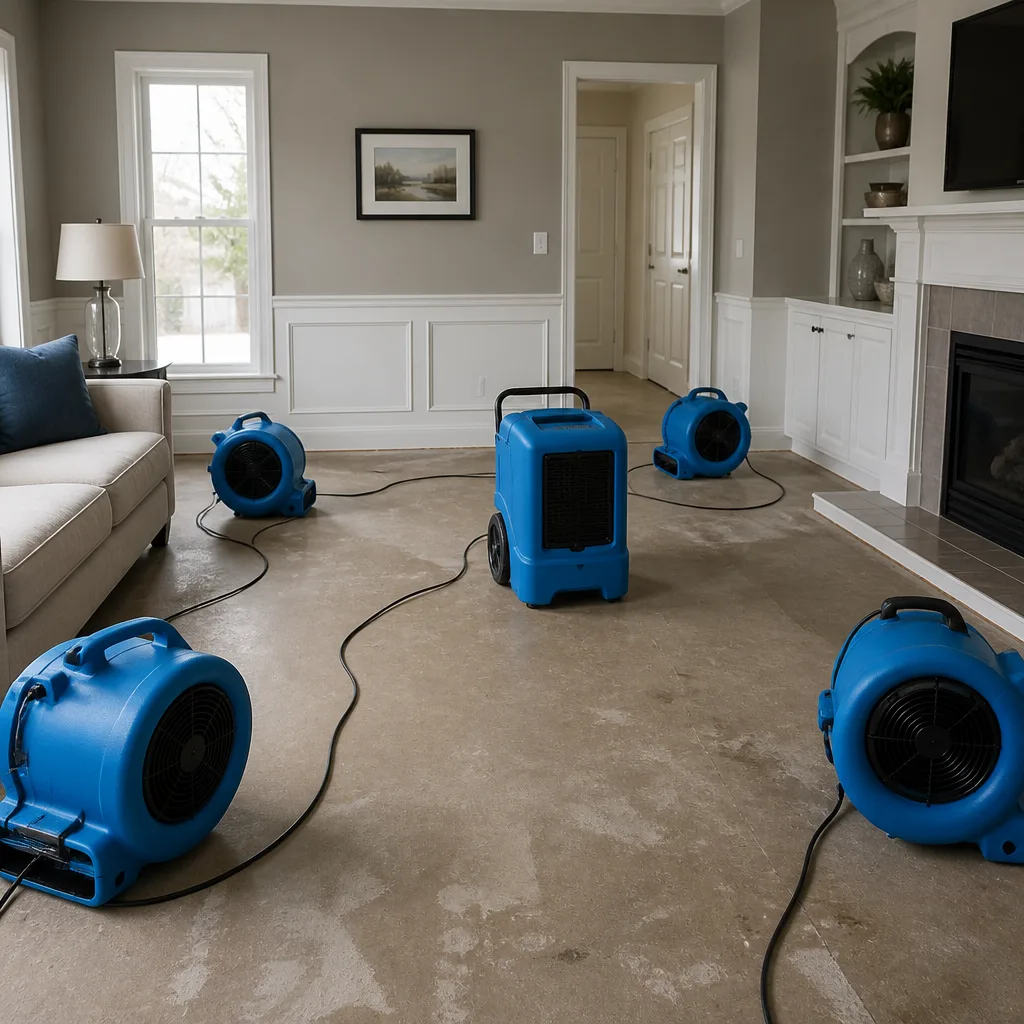

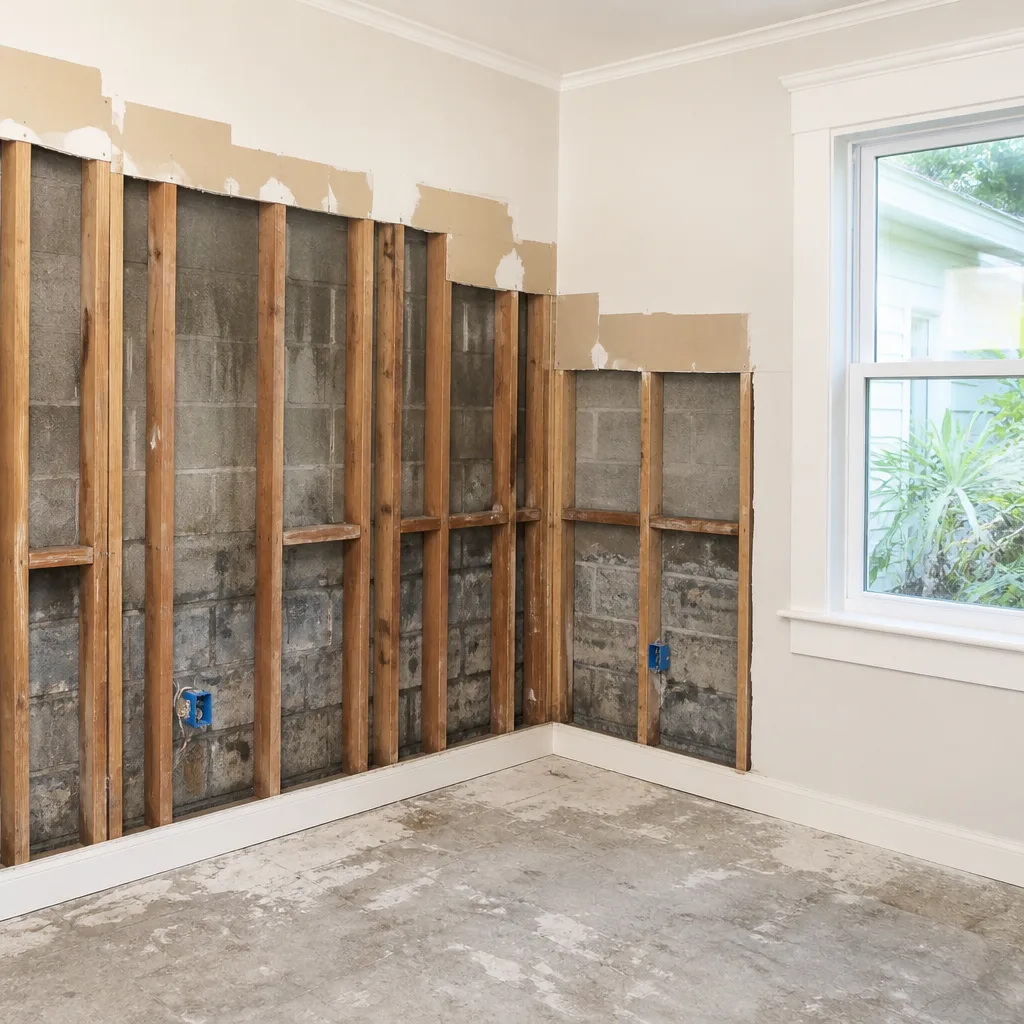

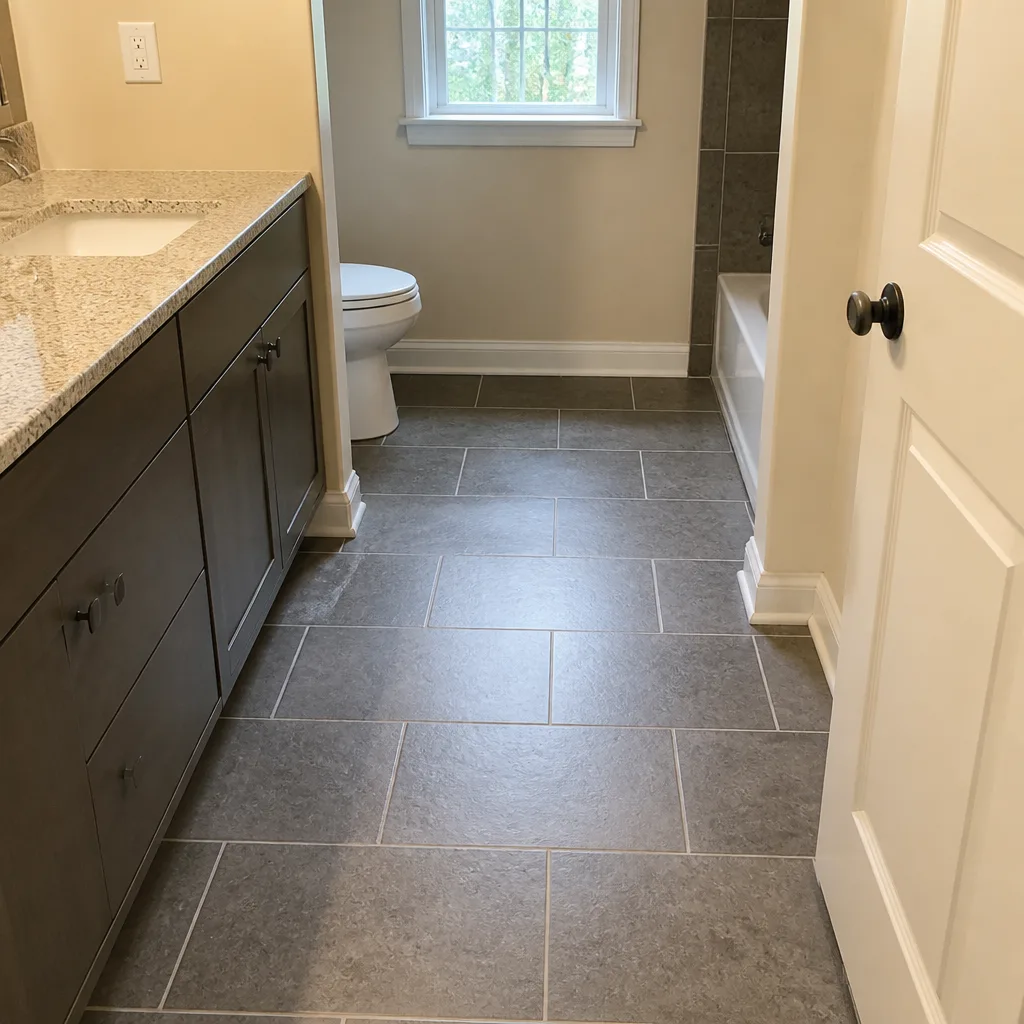

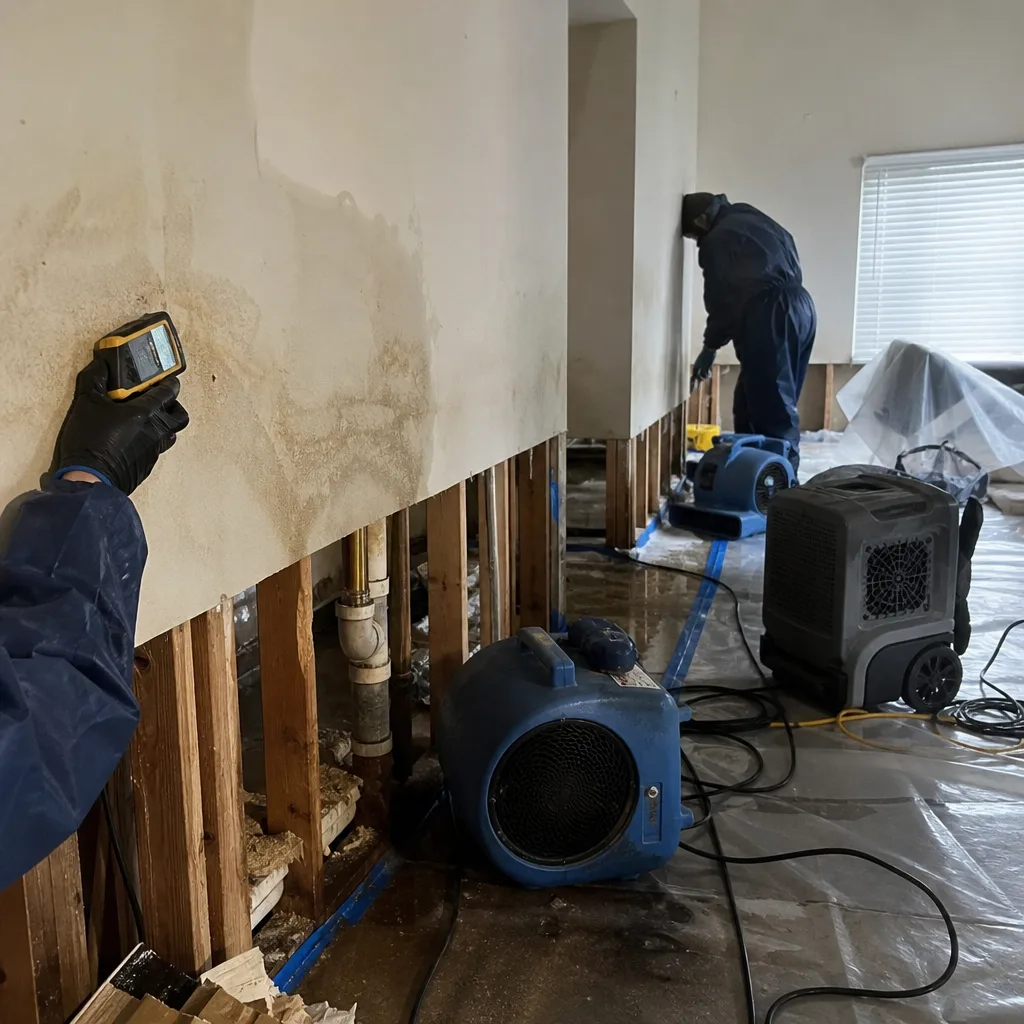 Before
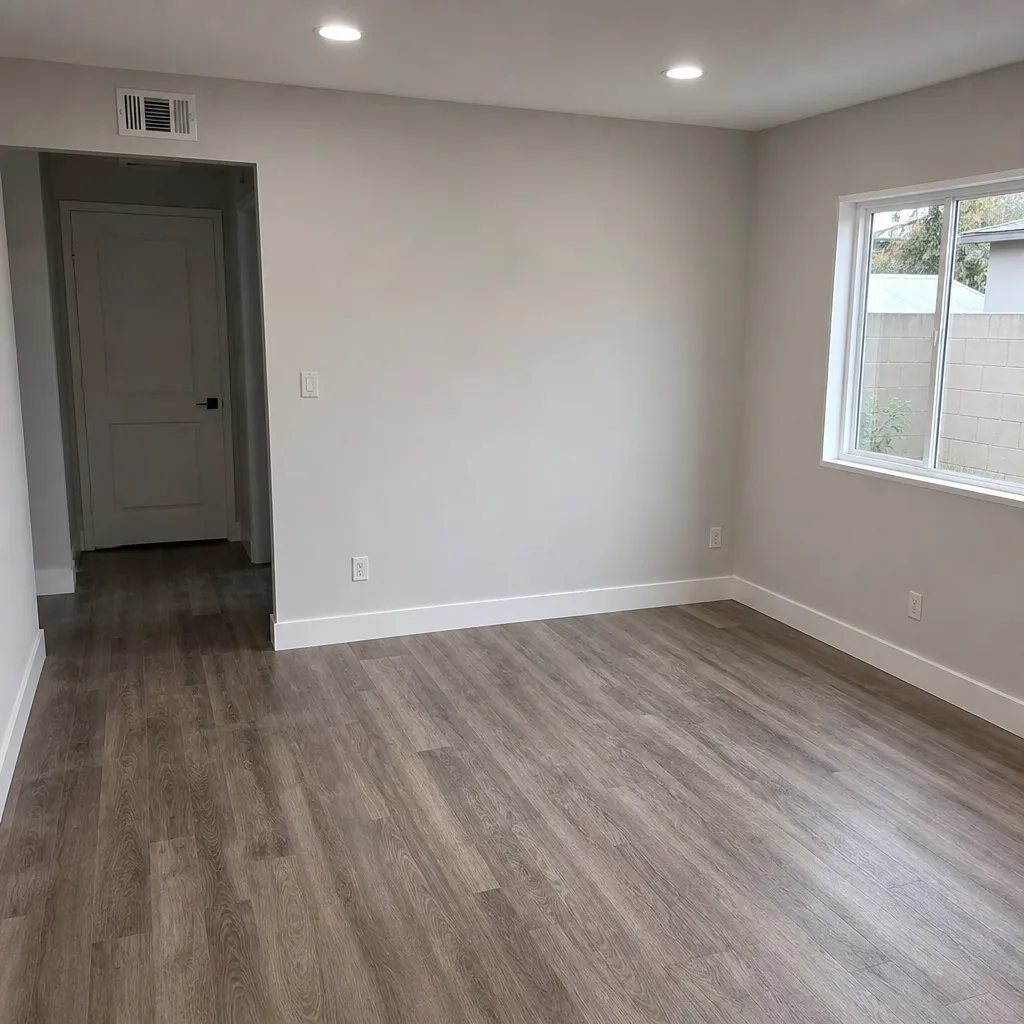 After
After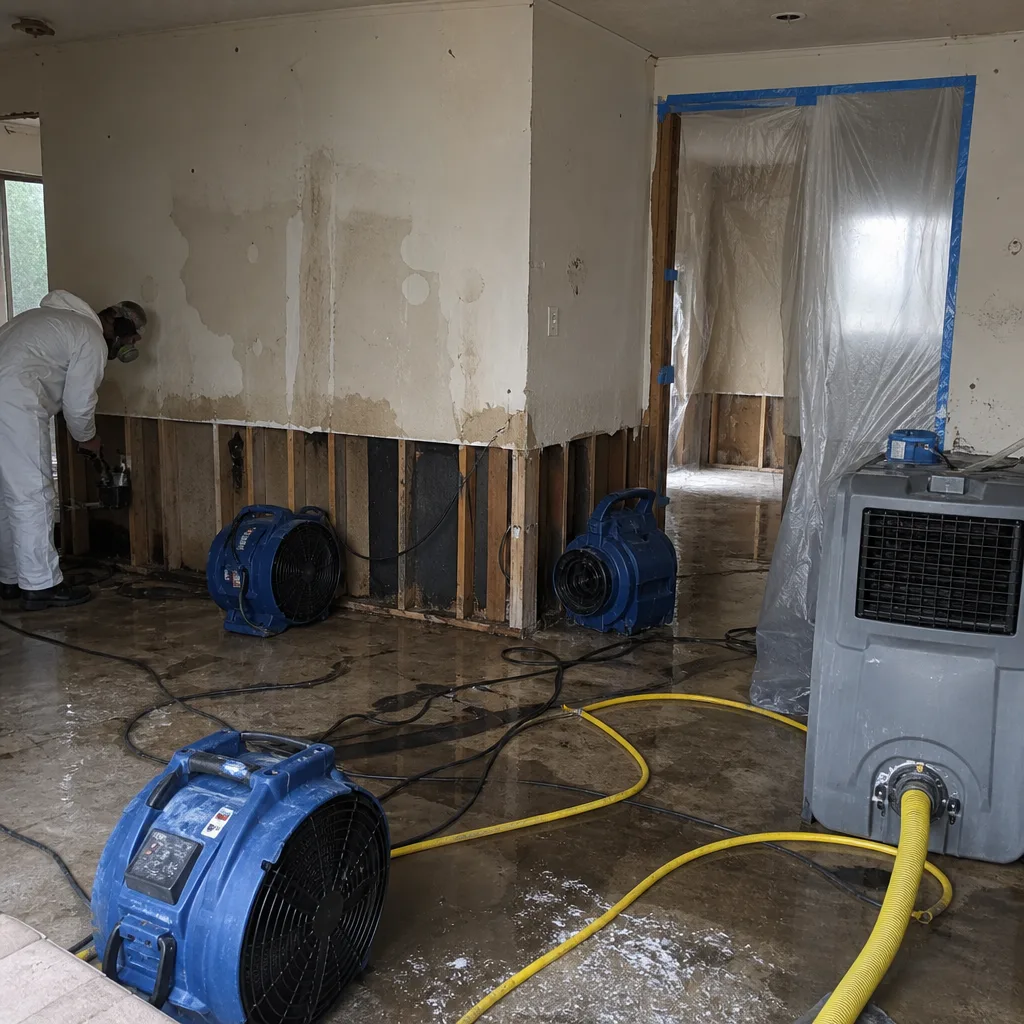 Before
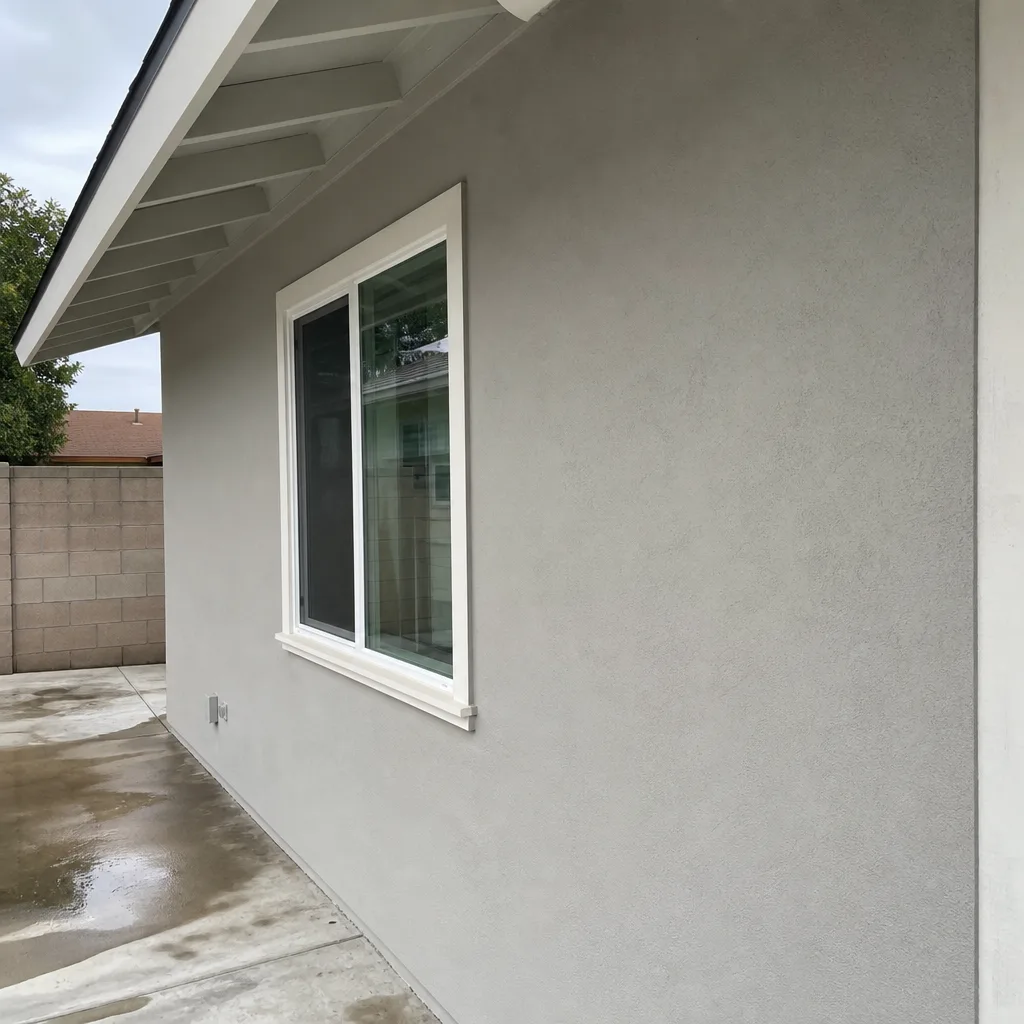 After
After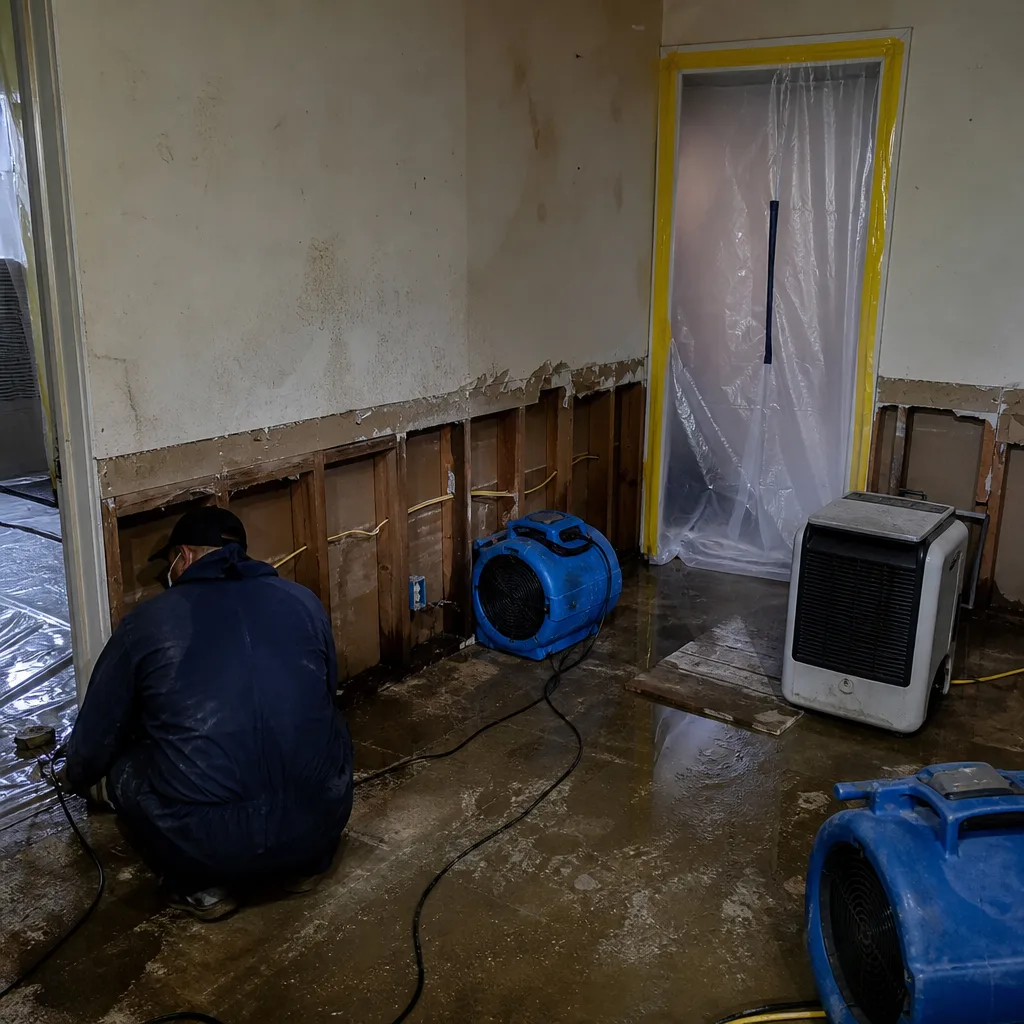 Before
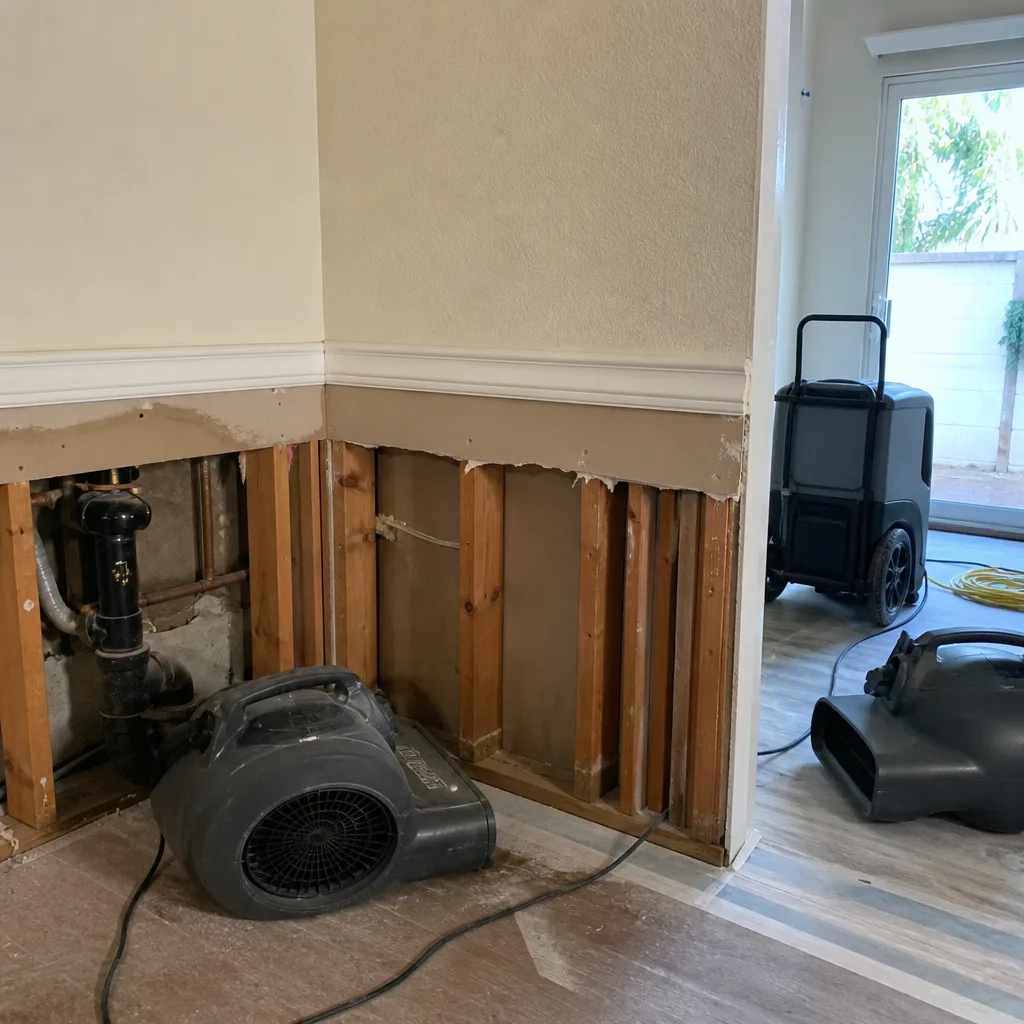 After
AfterDamage Restoration Warning Signs: A Cerritos Homeowner’s Reference Guide
A moisture reading of 17% in a wood-framed wall feels abstract until you know that IICRC S500 sets 16% as the upper limit for “dry” - one percentage point separates a normal wall from a documented moisture problem. In Cerritos, where winter atmospheric rivers and summer monsoon patterns push relative humidity past 70% for weeks at a time, that margin gets narrower every season. This guide translates the warning signs most homeowners notice - musty smells, discolored patches, warped flooring - into specific readings, visual patterns, and documentation steps that turn observation into evidence your contractor or adjuster can act on. For more guides & resources on protecting your home, see our blog.
Quick Answer
The most critical damage restoration warning signs in Cerritos homes are: moisture readings above 16% in wood framing, 12% in subfloors, or 0.5% above baseline in concrete slabs; efflorescence that reappears within 72 hours of cleaning; buckled laminate seams that don’t close during cooler morning hours; and any visible mold growth larger than 10 square feet. Document each finding with a dated photograph showing a coin or ruler for scale, and call a professional before the condition triggers your policy’s “known loss” exclusion. Not sure whether to tackle it yourself? Read our DIY vs Professional Damage Restoration: The Cerritos Homeowner’s Decision Guide first.
Table of Contents
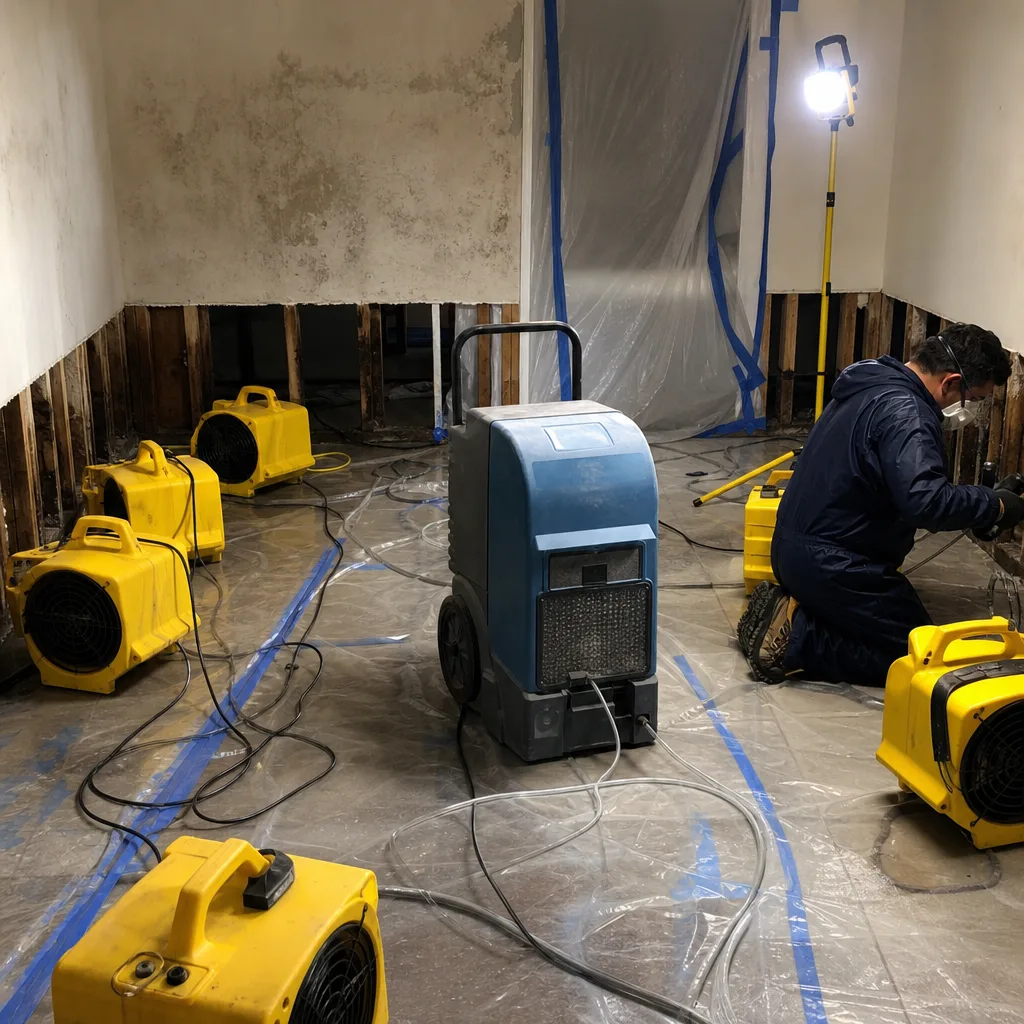
- Moisture Thresholds: When “Monitor This” Becomes “Call Today”
- Efflorescence vs. Active Water Migration on Cerritos Block Walls
- Reading Buckled Laminate: Thermal Expansion vs. Subfloor Saturation
- Visual Mold Identification: Stachybotrys vs. Cladosporium and What Each Means for Cost
- How to Document Warning Signs for Insurance Discovery Date
- Cerritos Climate Factors That Accelerate Hidden Damage
- Room-by-Room Warning Sign Checklist
- Common Mistakes to Avoid
- When to Call a Professional
- Frequently Asked Questions
BeforeAfterMoisture Thresholds: When “Monitor This” Becomes “Call Today”
Every material in your Cerritos home has a documented moisture threshold where damage becomes irreversible. The difference between “keep an eye on it” and “start drying now” is narrower than most homeowners realize, and guessing wrong costs thousands in unnecessary reconstruction.
Here are the IICRC S500 and S520 reference points we use on every Water Damage Restoration in Cerritos job:
| Material | “Dry” Threshold | Action Required |
|---|---|---|
| Wood framing (studs, sill plates) | 16% or lower | Above 16%: structural drying protocol; above 20%: potential decay organisms active |
| Plywood/OSB subfloor | 12% or lower | Above 12%: risk of delamination; above 18%: replacement likely |
| Concrete slab (above-grade) | 0.3% above baseline reading | Above 0.5%: vapor emission issue; above 3.0 lbs/1000 sq ft/24hr (CaCl test): flooring failure risk |
| Drywall (paper face) | 0.5% above baseline | Above 1%: gypsum core saturation; above 5%: microbial growth conditions met |
| Engineered wood flooring | 7-9% (varies by manufacturer) | Above 12%: cupping irreversible; check manufacturer spec sheet |
A pinless moisture meter runs about $35 at any Cerritos hardware store on South Street. Take baseline readings in October, when relative humidity typically drops to 45-50% - that’s your “dry standard” for the year. In our experience across Cerritos neighborhoods from Dairy Valley to the Artesia corridor, homeowners who maintain a seasonal log catch problems 6-8 weeks earlier than those relying on visual inspection alone. For year-round guidance, see Seasonal Damage Restoration Care for Cerritos: Year-Round Homeowner’s Guide.
The critical detail most guides omit: concrete slabs in Cerritos’s 90603 zip, built during the 1960s-70s construction boom, often test “dry” by surface reading while harboring moisture at the vapor barrier level. A surface reading of 0.4% can mask 2.8 lbs emission below. That’s why professional assessment includes both surface scanning and calcium chloride testing when flooring is involved.
Efflorescence vs. Active Water Migration on Cerritos Block Walls
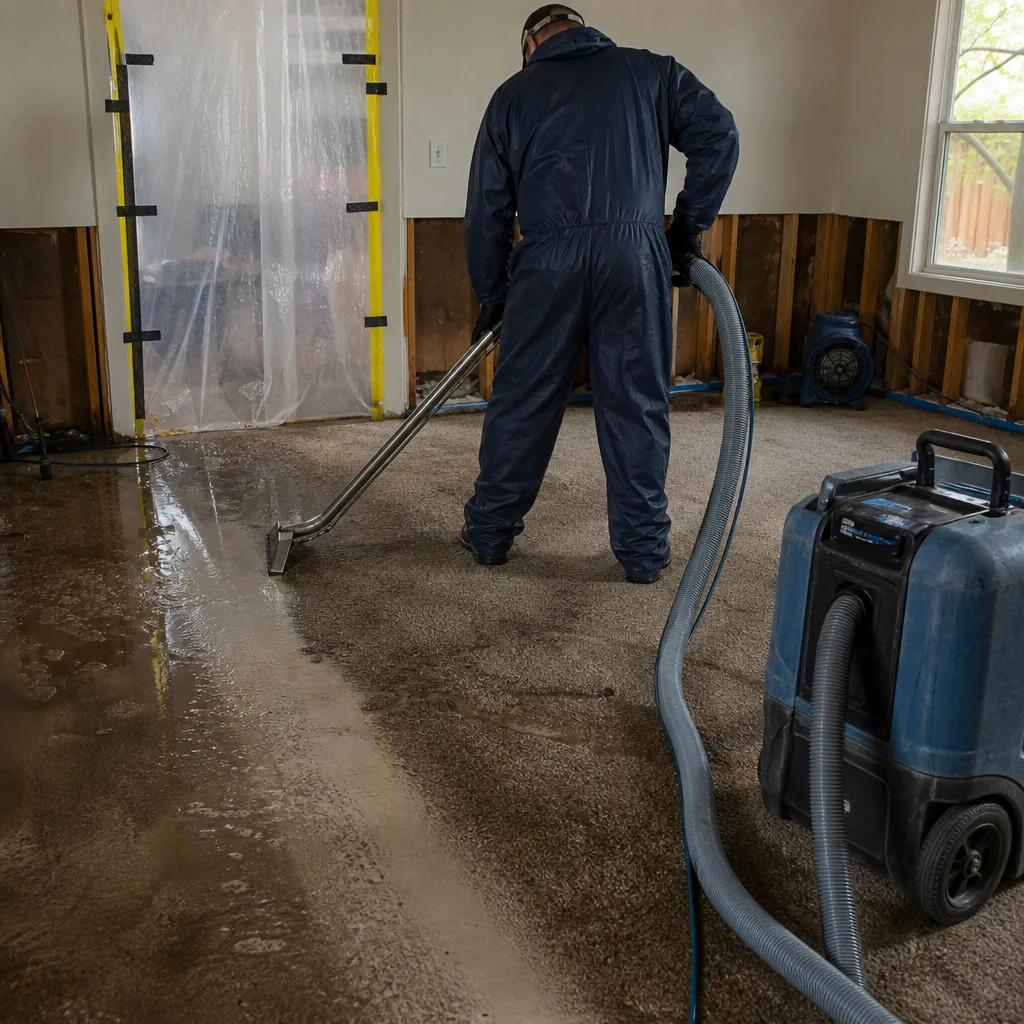
Cerritos sits on former dairy land with expansive clay soils and a shallow water table that fluctuates dramatically between wet and dry years. Block walls in older homes, particularly north of 183rd Street, show white crystalline deposits that homeowners routinely misread.
Efflorescence is salt migration - calcium hydroxide from the mortar mix carried to the surface by evaporating moisture. It’s cosmetic, though it signals that water passed through the wall at some point. Active water migration means the drainage plane behind the wall has failed, and hydrostatic pressure is pushing liquid water through the block matrix continuously.
Here’s how to distinguish them without cutting into the wall:
- Clean the area with a dry brush and mild vinegar solution. Photograph the cleaned surface with a date stamp.
- Wait 72 hours in dry conditions. Cerritos’s winter humidity can slow evaporation, so extend to 96 hours if outdoor RH is above 65%.
- Observe the pattern. Efflorescence returns as a fine, even dusting - salt crystals re-forming as residual moisture evaporates. Active migration appears as damp patches, darker discoloration, or a “tide line” at a consistent height (indicating the water table level).
- Check the base. Active migration often shows rust staining at the footer level from rebar corrosion, or spalling (surface flaking) where freeze-thaw cycles have accelerated - rare in Cerritos but possible in unconditioned garages during cold snaps.
- Test with plastic sheeting. Tape a 12-inch square of clear polyethylene to the wall for 24 hours. Condensation on the interior surface indicates active vapor drive; dry sheeting with exterior moisture suggests historical, not current, water passage.
In the Park Estates and Cerritos South areas, we’ve documented cases where homeowners treated active migration as efflorescence for three years, applying sealant that trapped water and accelerated rebar corrosion. The remediation cost jumped from $4,200 for drainage correction to $18,000 for wall reconstruction. The Haven Standard, Clause 1: a written price before work begins would have revealed that differential on day one.
Reading Buckled Laminate: Thermal Expansion vs. Subfloor Saturation
Laminate flooring in Cerritos homes - installed in thousands of properties during the 2003-2007 remodeling wave - presents a specific diagnostic challenge. The seams lift in two completely different scenarios with opposite solutions, and treating one as the other wastes money and masks ongoing damage.
Thermal expansion buckling occurs when planks absorb humidity and expand against fixed walls. It’s seasonal, predictable, and reversible. Key indicators: the buckle appears gradually across multiple rooms simultaneously, peaks in August-September when Cerritos humidity hits annual highs, and the planks return toward flat during cooler morning hours or when air conditioning runs continuously. You’ll typically see a “tented” pattern at wall transitions, not isolated peaks.
Subfloor saturation buckling indicates moisture from below - slab vapor emission, plumbing leakage, or exterior water intrusion. Key indicators: the buckle is localized to one area or follows a linear path (suggesting pipe location), appears suddenly after a specific event, and does not improve with temperature or humidity changes. The plank edges may show darkening or a musty odor when lifted.
The no-tool test: place a heavy book on the buckle overnight. Thermal expansion will show partial flattening by morning as the compressed plank releases stress against its neighbor. Subfloor saturation stays peaked - the swelling is in the core material, not the joint geometry.
We’ve replaced laminate in Cerritos homes where the previous contractor installed expansion joints every 8 feet (correct for thermal) while missing a slab vapor emission rate of 4.2 lbs - more than double the flooring manufacturer’s 2.0 lb specification. The new joints accommodated seasonal movement while the subfloor destroyed the replacement installation within 14 months. Proper diagnosis requires both a moisture meter reading and a CaCl test before any flooring decision.
Visual Mold Identification: Stachybotrys vs. Cladosporium and What Each Means for Cost
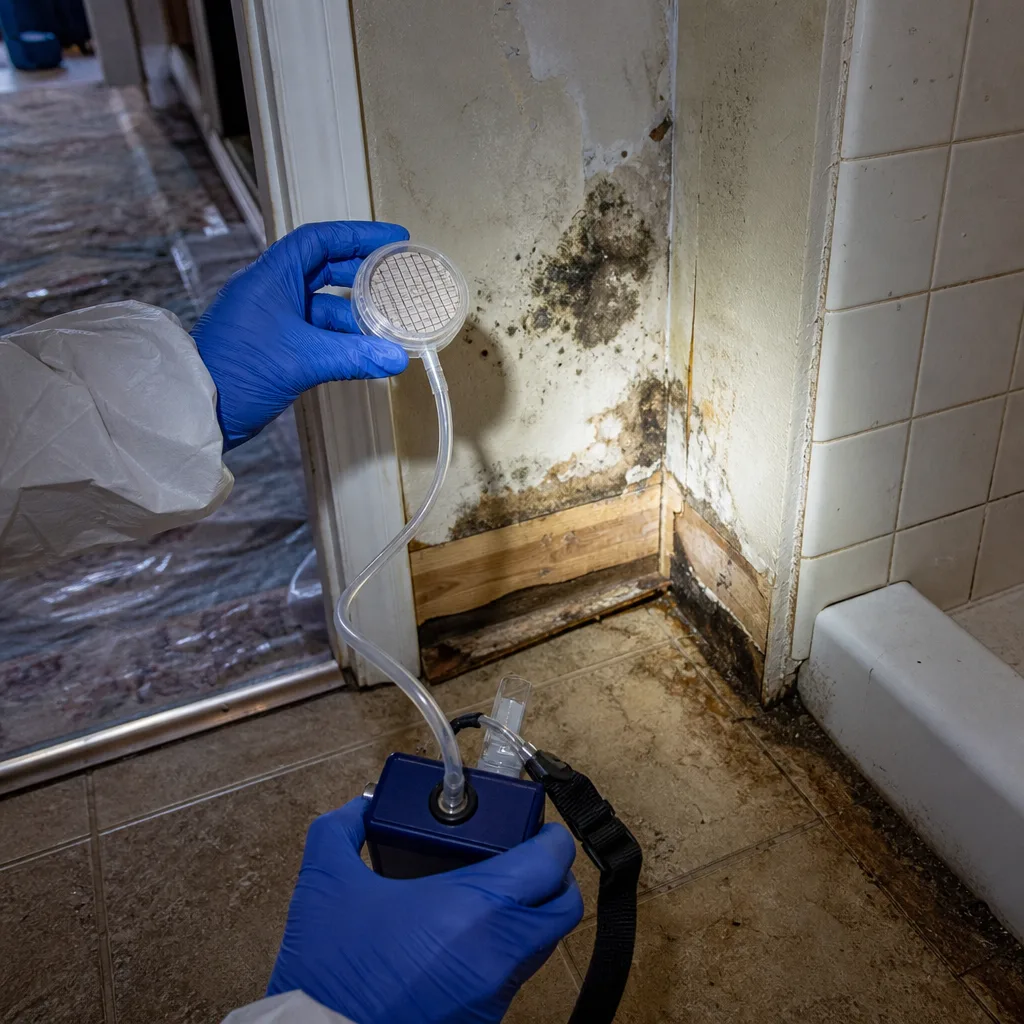
Not all mold triggers the same remediation protocol, and misidentification leads to either unnecessary demolition or inadequate treatment that regrows within months. In Cerritos’s climate, two species dominate the calls we field - and they demand different scopes of work.
Stachybotrys chartarum (“black mold”) grows on cellulose-rich materials with sustained moisture above 20% for 72+ hours. Visual pattern: slimy or powdery black growth with irregular margins, often following water pathways - under windows, behind failed shower surrounds, at slab perimeter where irrigation overspray hits foundation. It does not grow on concrete, tile, or glass; if you see black on those surfaces, it’s likely Cladosporium or dirt.
Remediation implication: Stachybotrys requires full containment with negative air pressure, HEPA filtration, and removal of porous materials in the affected area. The IICRC S520 standard mandates 6-mil polyethylene containment for areas exceeding 10 square feet. Cost in Cerritos typically runs $18-28 per square foot of contained area, with most residential jobs falling between $3,800 and $7,200.
Cladosporium is the most common indoor mold species. Visual pattern: olive-green to black, powdery or fuzzy, grows on virtually any surface including painted concrete, HVAC registers, and window frames. It thrives in Cerritos’s summer humidity spikes and often appears as pinpoint spots on bathroom ceilings or along exterior wall corners.
Remediation implication: Surface growth under 10 square feet can often be addressed with HEPA vacuuming and antimicrobial treatment of the source material, without full containment. Cost typically runs $800-1,800 for localized treatment. The critical step is identifying and fixing the moisture source - Cladosporium regrows within 6 weeks if humidity remains above 60%.
The distinction matters for insurance coverage too. Most policies cover mold remediation only when it results from a covered water loss, with sub-limits typically at $10,000. Documenting the species and its moisture source connection - with photos, moisture readings, and a written scope - determines whether your claim stays within that limit or exceeds it.
For professional assessment, Mold Remediation in Cerritos should include air sampling and ERMI/HERSTMI-2 dust analysis when health symptoms are reported, not just visual identification.
How to Document Warning Signs for Insurance Discovery Date
Insurance policies contain a “known condition” or “known loss” exclusion that denies coverage for damage the homeowner knew about and failed to address. The discovery date - when you first noticed or should have noticed the problem - determines whether your claim is accepted or denied. Documentation isn’t bureaucracy; it’s coverage protection.
Here’s the protocol we teach Cerritos homeowners:
- Photograph with scale and timestamp. Place a quarter or ruler in every frame. Enable location services on your phone so EXIF data records GPS coordinates. In Cerritos, where many homes share identical floor plans in tract developments, geo-tagged photos distinguish your property from your neighbor’s in claim disputes.
- Record environmental conditions. Note the date, time, indoor temperature, and relative humidity. A $15 hygrometer from Home Depot on Gridley Road is sufficient. If the damage followed a specific event - a storm, a plumbing incident, an irrigation line break - photograph the exterior conditions and any visible source.
- Email the photos to yourself at a dedicated address (yourname.home.maintenance@gmail.com). This creates a third-party timestamp through your email provider’s servers - admissible in most claim disputes. Don’t rely solely on phone storage; devices fail and timestamps can be challenged.
- Obtain a written assessment within 14 days. Even if you’re not ready to proceed with work, a contractor’s written scope with moisture readings establishes professional discovery separate from your own observation. Under The Haven Standard, DryMark Restoration Cerritos provides this at no charge - a documented record with no commitment to hire.
- Notify your insurer in writing within the policy’s reporting window, typically 30-60 days from discovery. Email creates a paper trail; phone calls do not. Include your photos, the contractor’s assessment, and a brief statement of when you first noticed the condition.
We’ve seen claims denied in Cerritos because a homeowner mentioned “it’s been like that since last winter” during a casual phone call with the adjuster. The recorded statement became evidence of prior knowledge. Document first, speak precisely, and let the written record carry the claim.
Cerritos Climate Factors That Accelerate Hidden Damage
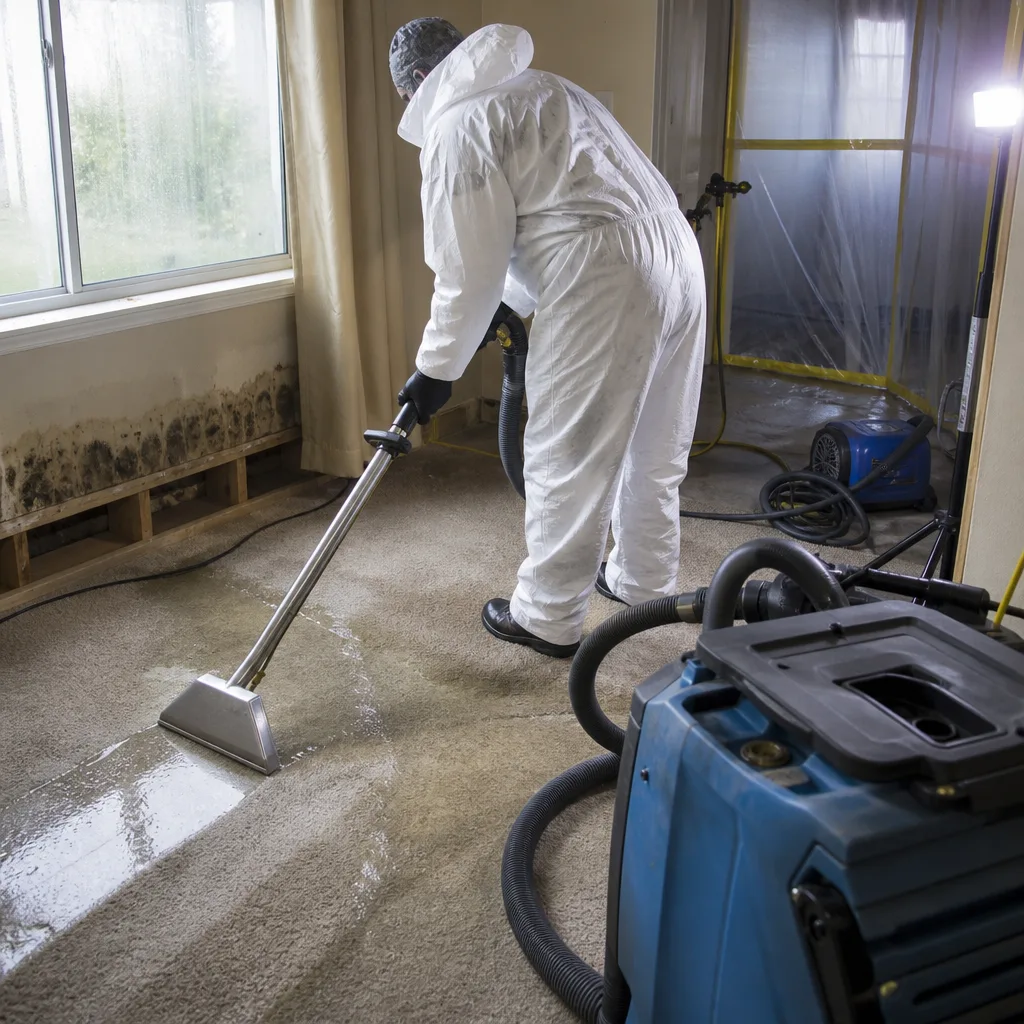
Cerritos’s location in the Los Angeles Basin creates specific moisture dynamics that shorten the window between “first warning sign” and “structural damage.” Understanding them helps interpret readings that seem normal for other regions.
Marine layer persistence: From May through July, moist Pacific air pushes inland overnight, often not burning off until 10 AM near the Cerritos Auto Square and other low-lying areas. Homes without whole-house dehumidification see indoor RH spike to 65-75% by dawn, even with air conditioning. This extends drying times for any moisture intrusion by 40-60% compared to inland climates.
Irrigation overspray patterns: The city’s extensive parkway landscaping and HOA-maintained common areas create chronic foundation wetting. In neighborhoods like Cerritos South and the area near Don Knabe Community Regional Park, we’ve traced slab moisture to sprinkler heads misaligned 15 years ago, delivering 2+ gallons nightly against stucco that was never designed for direct wetting.
Slab construction era: Homes built 1955-1975 typically lack capillary breaks between soil and slab. In Cerritos’s clay soils, seasonal moisture wicks directly into concrete, creating vapor emission that peaks in spring - precisely when homeowners open windows and reduce air conditioning, raising indoor humidity and condensation potential.
Santa Ana wind fire recovery: The 2017-2018 fire seasons affected air quality across the region, and many Cerritos homes received retrofitted HVAC filtration. The tighter envelopes trap moisture more effectively - beneficial for energy efficiency, but requiring active humidity management that older systems don’t provide.
These factors mean a moisture reading that’s “borderline” in Phoenix or Las Vegas is often “active problem” in Cerritos. Our drying protocols account for this with extended dehumidification phases using Phoenix and Dri-Eaz LGR units sized to the specific vapor pressure differential, not just square footage.
Room-by-Room Warning Sign Checklist
Use this checklist seasonally - we recommend March and October in Cerritos, before the peak humidity periods. Record readings in a dedicated notebook or spreadsheet; trends matter more than single measurements.
Exterior
- Efflorescence on block walls: present? Reappears after cleaning within ___ days?
- Foundation perimeter: soil slope directs water toward or away from structure?
- Irrigation spray pattern: any head hitting stucco, window wells, or slab edge?
- Roofline: staining at fascia boards, gutter overflow marks, missing kickout flashing?
Kitchen
- Under-sink cabinet: moisture reading at base panel? Any musty odor when doors open?
- Dishwasher: discoloration at toe-kick, soft spots in adjacent flooring?
- Refrigerator water line: calcium deposits on supply valve (indicates slow leak history)?
Bathrooms
- Shower surround: grout cracking at base, caulk separation from tub/tile junction?
- Toilet flange: staining on ceiling below (two-story homes) or soft flooring around base?
- Fan operation: measured CFM at grille (should be 50+ for standard bath, 80+ with shower)?
Laundry
- Washer hoses: blistering, kinking, or dated (rubber hoses over 5 years = replacement due)?
- Drain standpipe: water marks indicating backup history?
- Dryer vent: lint accumulation at exterior hood, proper backdraft damper operation?
Garage
- Slab: darkening at perimeter, especially where driveway meets foundation?
- Water heater: rust at base, age (tank water heaters over 10 years in Cerritos’s hard water = elevated failure risk)?
- HVAC platform: moisture staining, improper condensate drainage to exterior?
Attic
- Sheathing moisture: reading at multiple points (should be within 2% of outdoor ambient)?
- Ventilation: soffit vents unblocked by insulation, ridge vent continuous and unclogged?
- Penetrations: plumbing vent boots sealed, exhaust fans ducted to exterior (not terminated in attic)?
Common Mistakes to Avoid
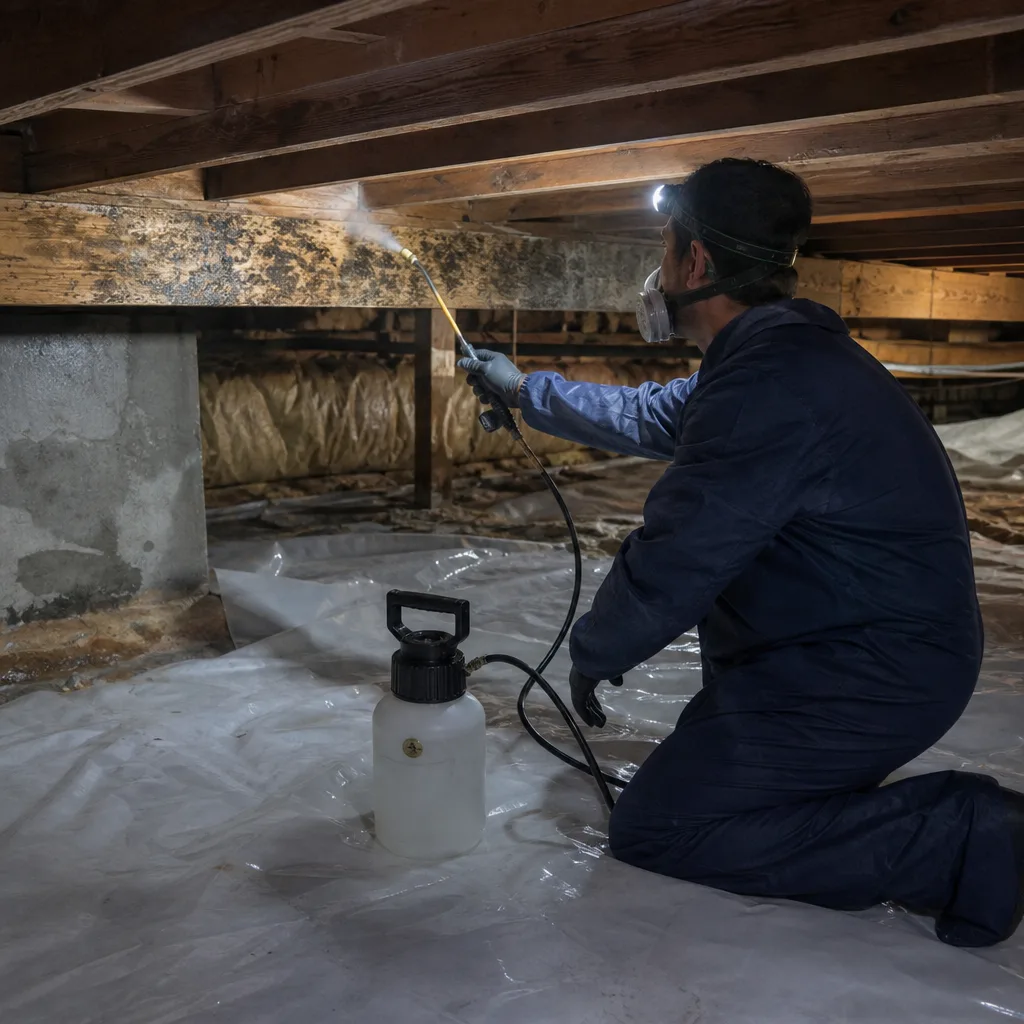
- Waiting for visible mold before acting. Mold requires 48-72 hours of moisture to colonize. By the time it’s visible, the structural drying window has often closed and removal-plus-replacement becomes necessary. In Cerritos’s humid summers, that window shrinks to 36 hours.
- Using bleach on porous materials. Chlorine bleach evaporates faster than it penetrates, leaving water behind that feeds deeper mold growth. It also degrades cellulose fibers in drywall and wood. Proper remediation uses antimicrobial formulations designed for restoration, not household cleaners.
- Trusting “dry to the touch.” Human skin detects surface moisture at approximately 30% RH - far above the threshold where mold thrives. A wall that feels dry can read 18% on a moisture meter, well into the danger zone for wood framing.
- Sealing efflorescence without diagnosing source. Waterproof coatings on block walls trap moisture and accelerate rebar corrosion. We’ve removed sealed walls in Cerritos homes where the block matrix had degraded to gravel behind a intact surface membrane.
- Ignoring seasonal baselines. A subfloor reading of 14% seems alarming if your baseline is 9%, but normal if your October baseline was 13% in a home with elevated slab vapor emission. Without seasonal records, every reading becomes an emergency or none do - both are expensive errors.
- Accepting verbal estimates for mitigation work. Haven Standard, Clause 1 exists because scope-creep on water jobs is endemic in this industry. A written price before work begins protects both parties and creates the documentation trail that insurance requires.
- Photographing damage without scale or context. A close-up of dark staining proves nothing about size, location, or progression. Every photo needs a reference object and enough surrounding context to identify the room and approximate position.
When to Call a Professional
Call today, not tomorrow, when: moisture readings exceed the thresholds in this guide; you discover active water migration after eliminating efflorescence; mold growth exceeds 10 square feet or appears in multiple locations; any water event involves Category 2 (gray) or Category 3 (black) water; or you need documentation for an insurance claim within the reporting window.
Speed matters on mitigation. Water continues wicking upward in drywall at 1-2 inches per hour through capillary action, and microbial growth begins within 36-72 hours in Cerritos’s climate. Every day of delay extends drying time and increases reconstruction scope.
DryMark Restoration Cerritos offers free estimates in Cerritos - call (562) 600-5083. Every assessment includes moisture readings, a written scope with line-item pricing before any work begins, and a photo-documented record you can submit directly to your adjuster. The 365-Day Done Right Promise under The Haven Standard covers all work, with a Free Second Opinion available on any competitor’s written estimate.
For fire and smoke damage concerns, see Fire & Smoke Damage Restoration in Cerritos.
Frequently Asked Questions
Reputable restoration companies in Cerritos typically provide initial moisture assessment and written scope at no charge, with the understanding that you’ll receive a documented price before any work begins. DryMark Restoration Cerritos follows Haven Standard, Clause 1: written price before work starts, every time, with no exceptions. Call (562) 600-5083 to schedule - estimates are free.
Coverage depends on when you discovered the damage and whether you took reasonable steps to mitigate it. The “known condition” exclusion denies claims where the homeowner knew of the problem and failed to act. However, noticing a stain is not the same as knowing structural damage exists - documentation of your discovery process, including dated photos and professional assessment timelines, determines the outcome. We coordinate directly with adjusters to establish clear discovery dates.
Consumer pinless meters ($30-80) are accurate enough for baseline tracking and initial screening. Professional restoration uses penetrating meters with insulated pins, thermo-hygrometers for vapor pressure differential calculation, and thermal imaging for non-destructive moisture mapping. If your consumer meter shows readings near the thresholds in this guide, professional confirmation is warranted - the cost of a false negative far exceeds the assessment fee.
Live phone coverage is available 24 hours a day, 7 days a week with no voicemail on emergency lines. For active water intrusion and mitigation emergencies, we dispatch from our Cerritos service area. Reconstruction and non-emergency work is scheduled and scoped in writing, typically within 48-72 hours of contact. Call (562) 600-5083 for current availability.
Areas under 10 square feet with confirmed Cladosporium on hard surfaces may be addressed with HEPA vacuuming and source moisture correction, provided you have no respiratory sensitivities. Stachybotrys, any growth exceeding 10 square feet, or mold in HVAC systems requires professional remediation under IICRC S520 with proper containment and air filtration. The health risk and potential for cross-contamination increase sharply beyond the DIY threshold.
A drying log documents daily moisture readings, equipment placement, and psychrometric conditions (temperature, relative humidity, specific humidity, vapor pressure) that prove the drying progressed to IICRC S500 standards. A photo record provides visual documentation of conditions at each visit. Together, they form the evidence package that turns a restoration invoice into a payable insurance claim. DryMark Restoration Cerritos provides both as standard deliverables on every job, never as upsells.
The Bottom Line
Warning signs become useful when they’re measurable, documented, and acted on before thresholds are crossed. In Cerritos’s climate, the margin between “monitor this” and “mitigate now” is often a single percentage point of moisture or a 72-hour window of humidity exposure. Maintain seasonal baseline readings, photograph any anomaly with scale and timestamp, and obtain written professional assessment before your policy’s reporting window closes. The cost of documentation is zero; the cost of delayed action is measured in thousands of dollars and weeks of displaced living. For moisture assessment, mold evaluation, or documentation of any warning sign in this guide, contact DryMark Restoration Cerritos at (562) 600-5083.
Written by Alicia Brennan, Owner at DryMark Restoration Cerritos, serving Cerritos since 2011.